Venues that keep trading through the change.
The planning route and the trading impact get settled before anything is drawn.
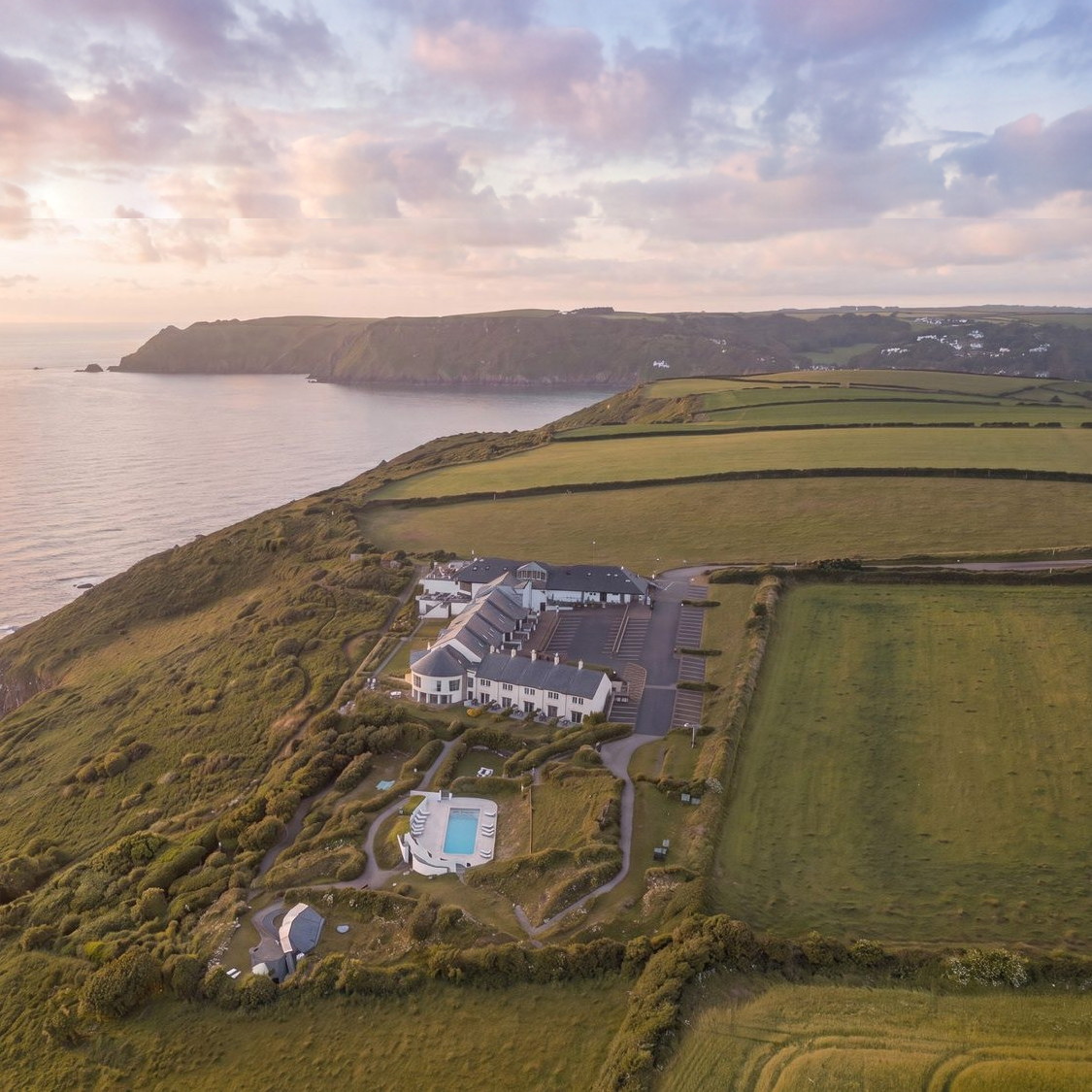
Gara Rock
A seventeen-room hotel, five cottages and ten apartments on a clifftop, carried from working drawings through to handover.
View project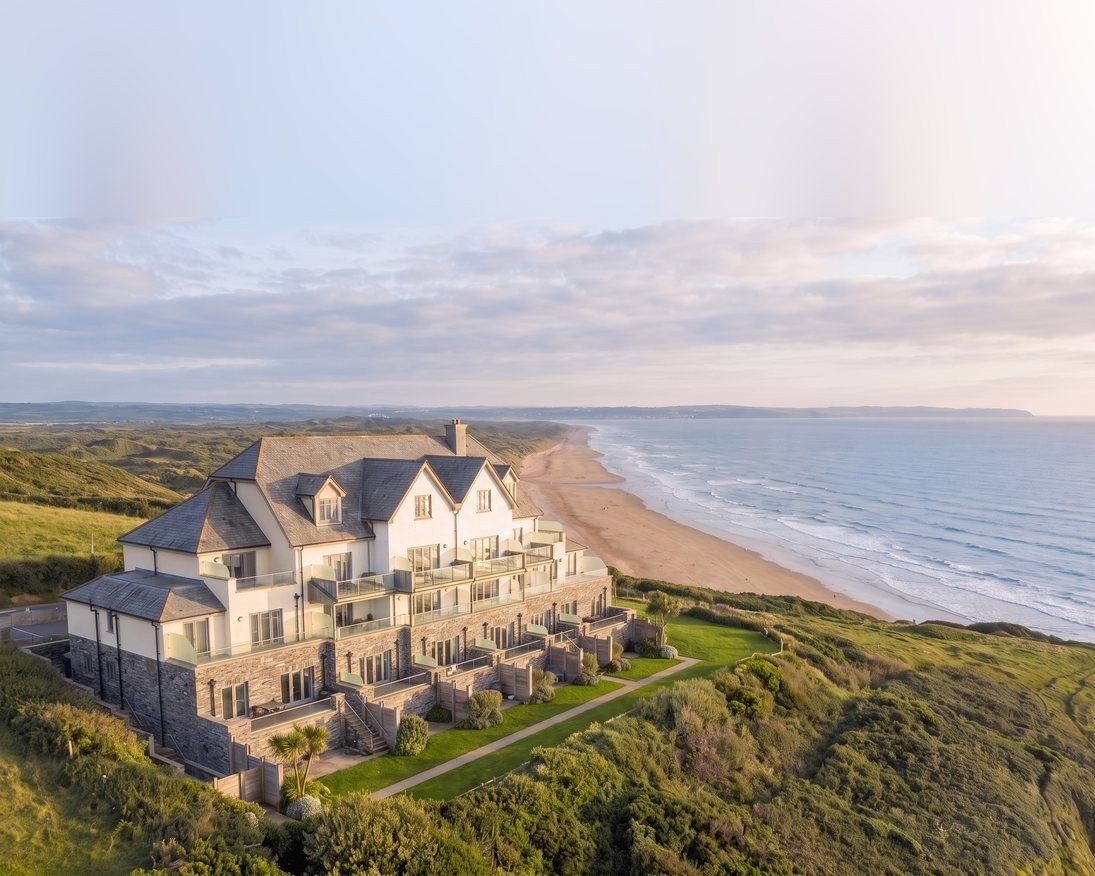
Ocean Point
An ageing hotel replaced by sixteen apartments over five levels, every one sold off-plan as the building rose.
View project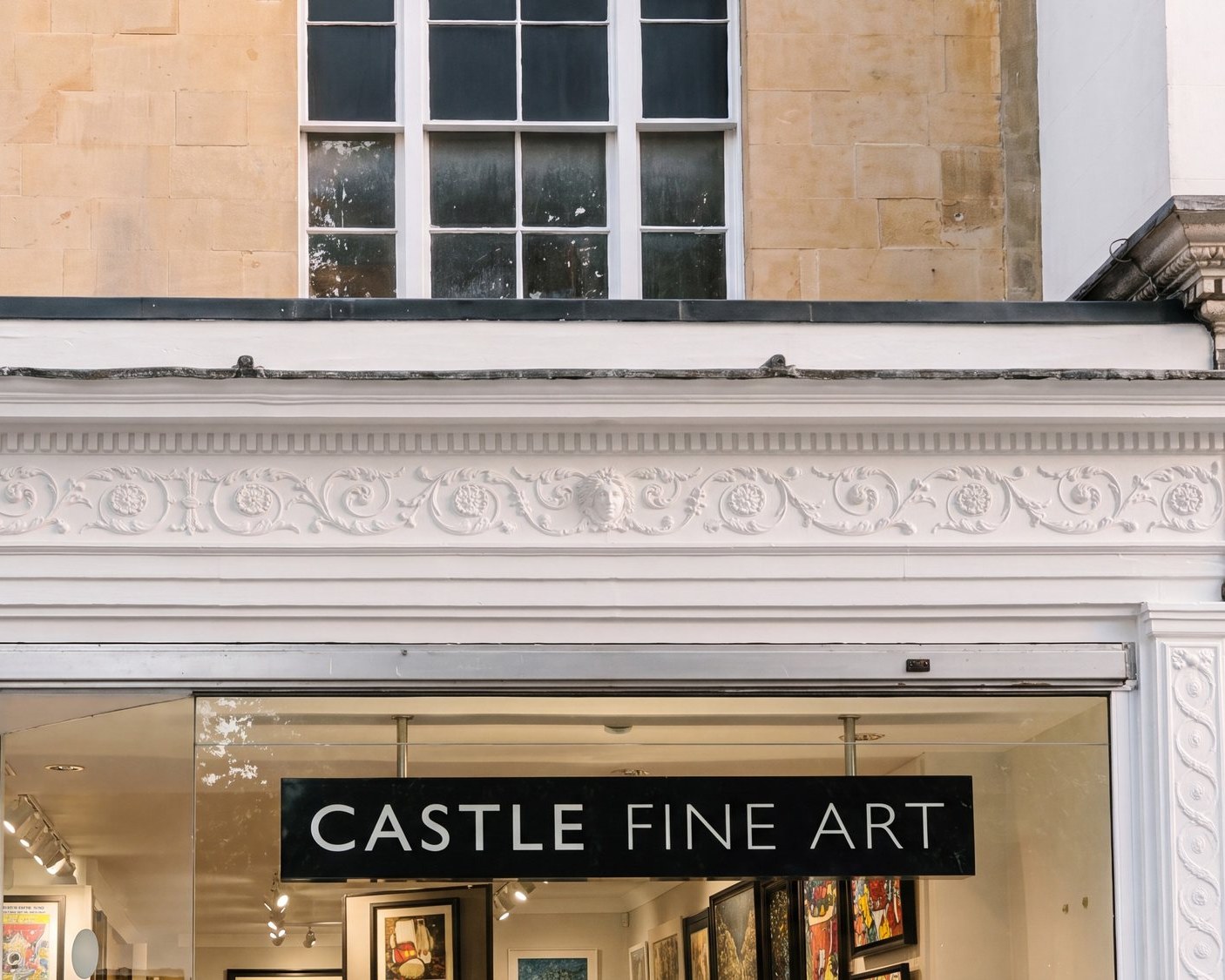
The Promenade
Two floors stranded by an unsafe stair, opened up as a gallery over four, with one new sign the only change to the street.
View project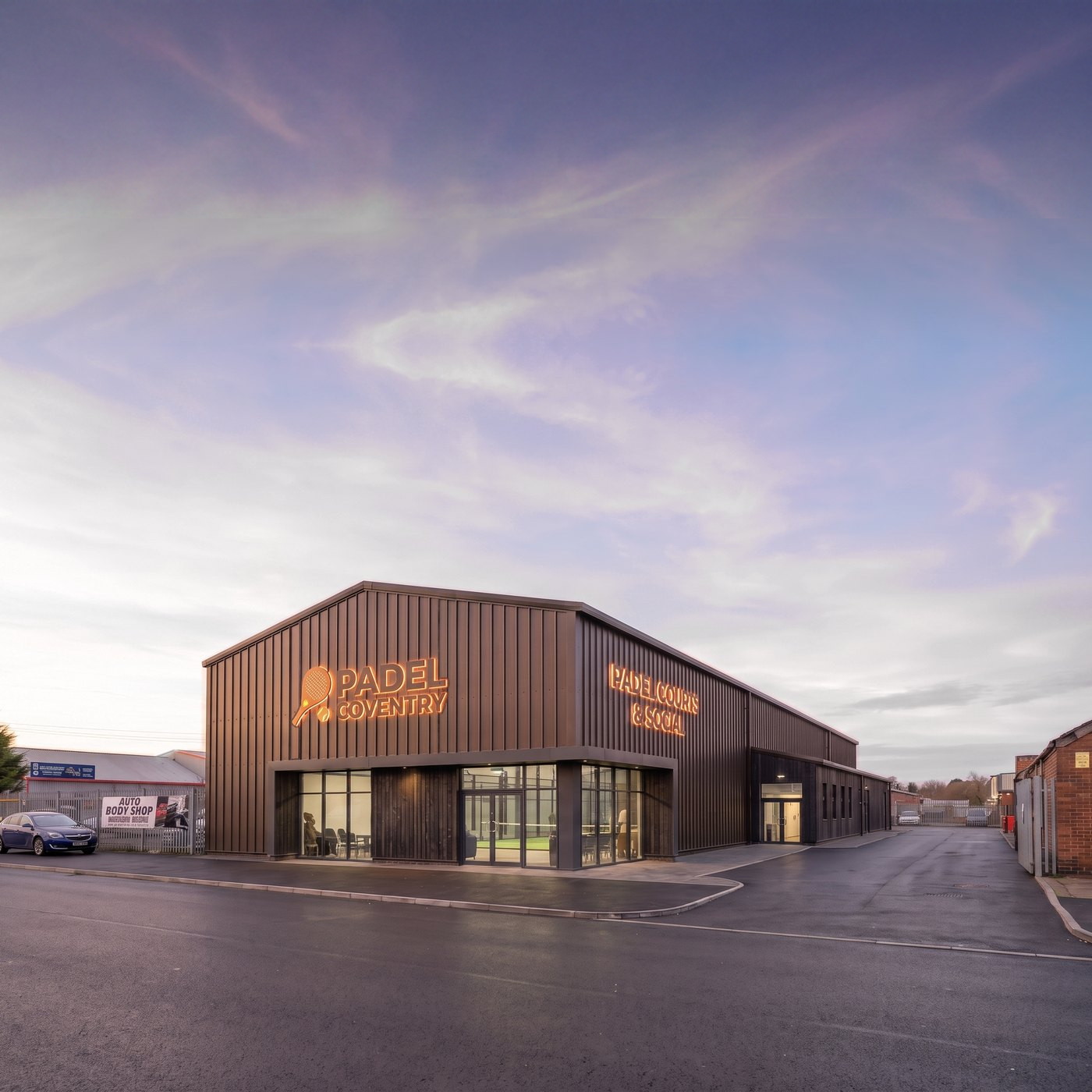
Padel Coventry
A leisure venue on protected employment land, taken to a written council position before a full application was drafted.
View projectGet to know the site.
 Where you stand · 01
Two pubs a mile apart, two problems.
Trading or closed, listed or not, and how much land the pub does not actually use. Four checks settle the route, and all four take an afternoon.
Read more → The routes · 02
Where the homes come from.
Four routes carry almost every scheme, and they are nothing like equally hard. The car park is a different proposition from the building.
Read more → The evidence · 03
Where a venue goes, drawings do not decide it.
Take the pub and the case depends on whether it had a future, proved by the applicant. The bar is set locally and it moves district to district.
Read more → Trading through · 04
A venue that shuts pays twice.
Refurbishment phased around the trading floor, so the right areas stay open and income is protected as far as the building will allow.
Read more → The full service · 05
The whole building, not the interior.
Feasibility, planning, Building Regulations, technical drawings, tendering and contract administration. Stages 0 to 7, so a venue gets built as drawn.
Read more →Three consents in seven weeks.
Oxford Business College, Nottingham. A two-storey cafe cut into the slope, fully glazed with a roof terrace, submitted alongside three campus consents granted in seven weeks.
Send us the site and what the asset does now. A director tells you plainly whether the planning and the numbers hold.
→ Start a conversation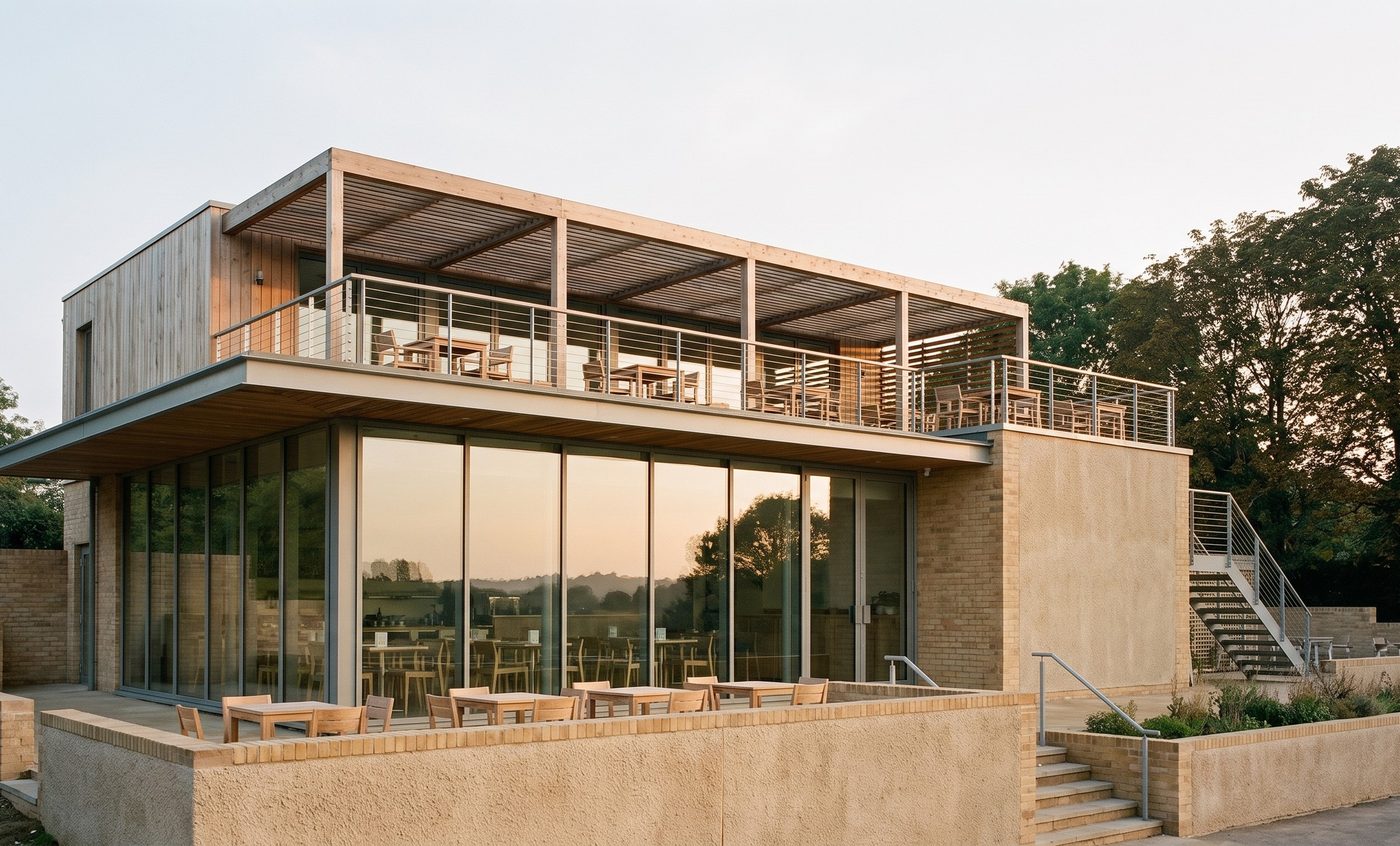
The cafe is the fourth application on a six hectare campus instruction at Carlton Road, where works to convert a former sports and leisure building into a cafe and library had started without permission and the part-built work failed on means of escape. The position was recovered with a redesigned layout and a rear extension developed with the fire engineers, and Nottingham City Council granted three permissions inside seven weeks, the cafe and library among them under 25/00971/PFUL3. The external cafe pictured is submitted and awaiting decision. Read the campus project.
More
As lead consultant and architect the practice ran the masterplan, the applications and more than ten consultant disciplines.
The pub record runs alongside: five pub sites on this page, twelve homes between them, and on four of the five the pub itself was never in the application; the work runs from single sites for individual operators to instructions across a national pub estate.
More
Royal Anchor, Liphook: four houses behind a Grade II listed coaching inn in a conservation area, East Hampshire ref 27205/025, granted September 2024. Malt Shovel, Ryton: two houses and garages in the grounds of a village inn, Rugby ref R22/0586, granted November 2023. White Hart, Oldbury: three homes on surplus land at a trading pub, North Warwickshire ref PAP/2023/0324, refused on highway safety and allowed at appeal in January 2026. The layout and the access geometry were this practice's, with a separate planning consultant running the appeal. Blacksmith's Arms, Ryton: two houses on the pub car park, Rugby refs R12/1393 and R16/2514, granted 2014 and again in 2017. 34 Windsor Street, Burbage: a public house that had already closed, taken to a single dwelling, Hinckley and Bosworth ref 20/01298/FUL, granted February 2021.
Every application made in the practice's own name is a matter of public record, and those reach more than 100 planning authorities. The practice has worked since 1970. Read the Royal Anchor project.
Two pubs a mile apart, two problems.
Two pubs a mile apart can be completely different planning problems, and the difference is rarely the building. Four things settle it, and all four can be established in an afternoon: whether the pub is trading or closed, whether the building is listed and whether it stands in a conservation area, whether anyone has had it listed as an asset of community value, and how much land comes with it that the pub does not actually use.
That last one decides more schemes than the other three together. A pub with a car park, a yard and a beer garden has a route that a pub in a terrace has not. Ownership is worth establishing at the same time, because land that looks like the pub's is often in a separate title, or carries a right of way, a covenant or a lease to the operator. None of that stops a permission being granted, but all of it decides whether the permission can be acted on. Read the full guide to pub sites.
Where the homes come from.
Four routes carry almost every pub scheme, and this is roughly their order of difficulty. The land the pub does not use: the car park, the yard, the beer garden. The floors above, where letting rooms and a manager's flat become self-contained homes while the trading floor stays. A smaller pub and homes, where the building is reconfigured to a trading area an operator can actually fill. And the whole building, which is the route policy is written to control.
Almost every pub scheme in this practice's own record comes from the first of those, because nothing anyone values has to be given up to take it. Where the aim is to release residential value from an asset rather than to keep a venue trading, the same feasibility work applies. The route is set out on the development pages.
Where a venue goes, drawings do not decide it.
Where a scheme takes the pub, the decision is made on whether the pub had a future, and the applicant is the one who has to prove it had not. There is no national standard for that proof. National policy asks authorities to guard against the unnecessary loss of valued facilities and lists public houses among them, but it leaves the test to the development plan, so the bar is set locally and moves from district to district.
A marketing campaign usually answers only one limb of it, and a viability case has to show the pub could not trade, not that it would trade less profitably than the houses. Those are very different propositions, and the second one loses. Where the evidence is not there, we say so in week one, before the fees have run.
A venue that shuts pays twice.
A refurbishment that closes the doors is paid for twice, once in the works and once in the trade it did not take. So the sequence is designed rather than assumed: the work is phased around the trading floor so the right areas stay open, and that starts by establishing what the fabric and the budget will realistically carry rather than what the programme would prefer.
At 82A The Promenade in Cheltenham the whole scheme was arranged so the only visible change to the street was a new fascia sign. A new timber stair with a glazed balustrade replaced one that was not fit for customers, the new steelwork was carried inside the building and fire protected, and the historic external walls were left untouched. Two floors that had sat largely unused came back into the gallery.
The whole building, not the interior.
Hospitality work here runs the full RIBA sequence, stages 0 to 7, rather than interior styling alone: feasibility, design, planning and listed building consent, Building Regulations, technical drawings, tendering and contract administration on site. That matters most on the buildings that have to be delivered rather than only permitted, which is where a good many hospitality schemes come apart.
At Gara Rock in South Devon we were architect and lead consultant and then novated to the contractor under design and build, producing the working drawings, the specification and the Employer's Requirements for a seventeen-room hotel, five cottages and ten apartments on a clifftop. The scheme's planning applications were led by a separate practice; the building of it was ours.
Questions? Start here.
Straight answers to what operators and landowners ask first about a hospitality asset.

Do you need planning permission to turn a pub into homes?
Yes, in every case. A pub is a use of its own, outside every use class since September 2020, so there is no permitted development route into housing, and demolition needs permission too. A change of use is a full planning application, and where the building is listed, listed building consent runs alongside it.
Read more →
Can homes be built on a pub site without losing the pub?
Usually, and it is much the easier application. Where the homes come from the car park, the yard or the beer garden, the pub itself is never in the application, so there is no loss to justify, no marketing period to serve and no viability case to build. Four of the five pub sites on this page went that way.
View the project →
Do you design hotels and venues, or only convert pubs?
Both. The work on this page runs from a seventeen-room clifftop hotel with cottages and apartments, to an ageing hotel replaced by sixteen holiday apartments, a listed gallery opened up over four floors, and a four-court padel club with a cafe. We take on conversion and new build, and the whole building rather than the interior alone.
View the project →
Can a venue be refurbished while it keeps trading?
Yes, where the phasing is designed rather than assumed. Work is sequenced around the trading floor so the right areas stay open, starting from what the fabric and the budget will carry. At 82A The Promenade in Cheltenham a listed building gained a new stair and two more floors of gallery, with one sign the only change to the street.
View the project →
How can a hospitality scheme be tested before spending on design?
By asking the council first. A pre-application submission puts the principle of the development in writing before a full application is drafted, which is cheap next to a refusal. A four-court padel club with a cafe, on protected employment land in Coventry, reached a written council position in about five weeks, for £936.
View the project →
Is a listed pub a different problem?
Yes, and the two consents are separate. Planning permission decides the use; listed building consent decides what may be done to the fabric, and the two are determined side by side. Setting counts as well, so new houses in the grounds of a listed inn are assessed for their effect on it even where nothing touches the inn.
Read more →