One plan from 2016, and nothing behind it.
The Core Strategy adopted in July 2016 decides applications. The Site Allocations Plan meant to follow it was withdrawn by full Council in April 2026.
Read moreVillages, farmsteads and barns across a wide rural district, under one council years short of housing land.
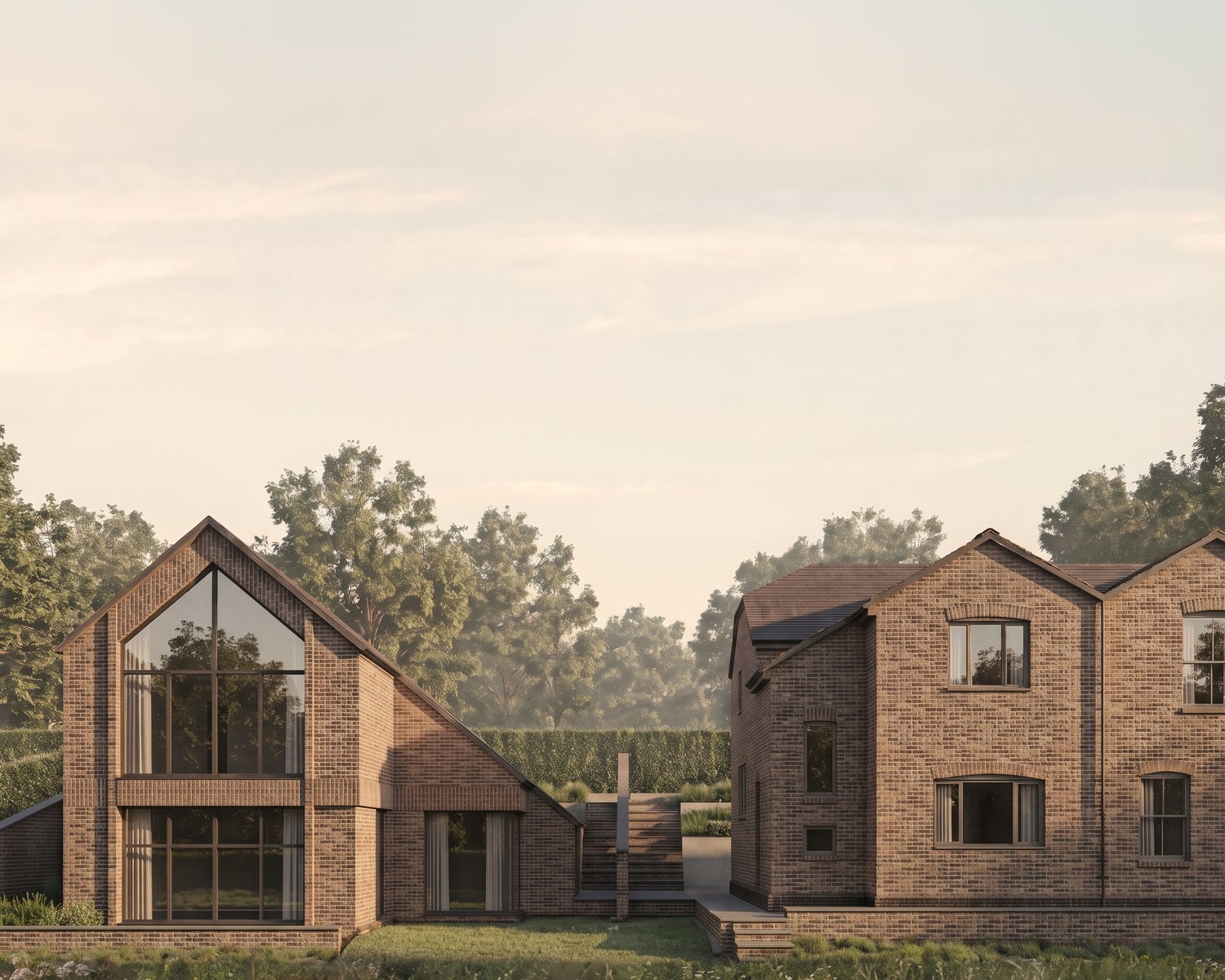
Re-dressed to the village, environmental design intact, consented at committee.
View project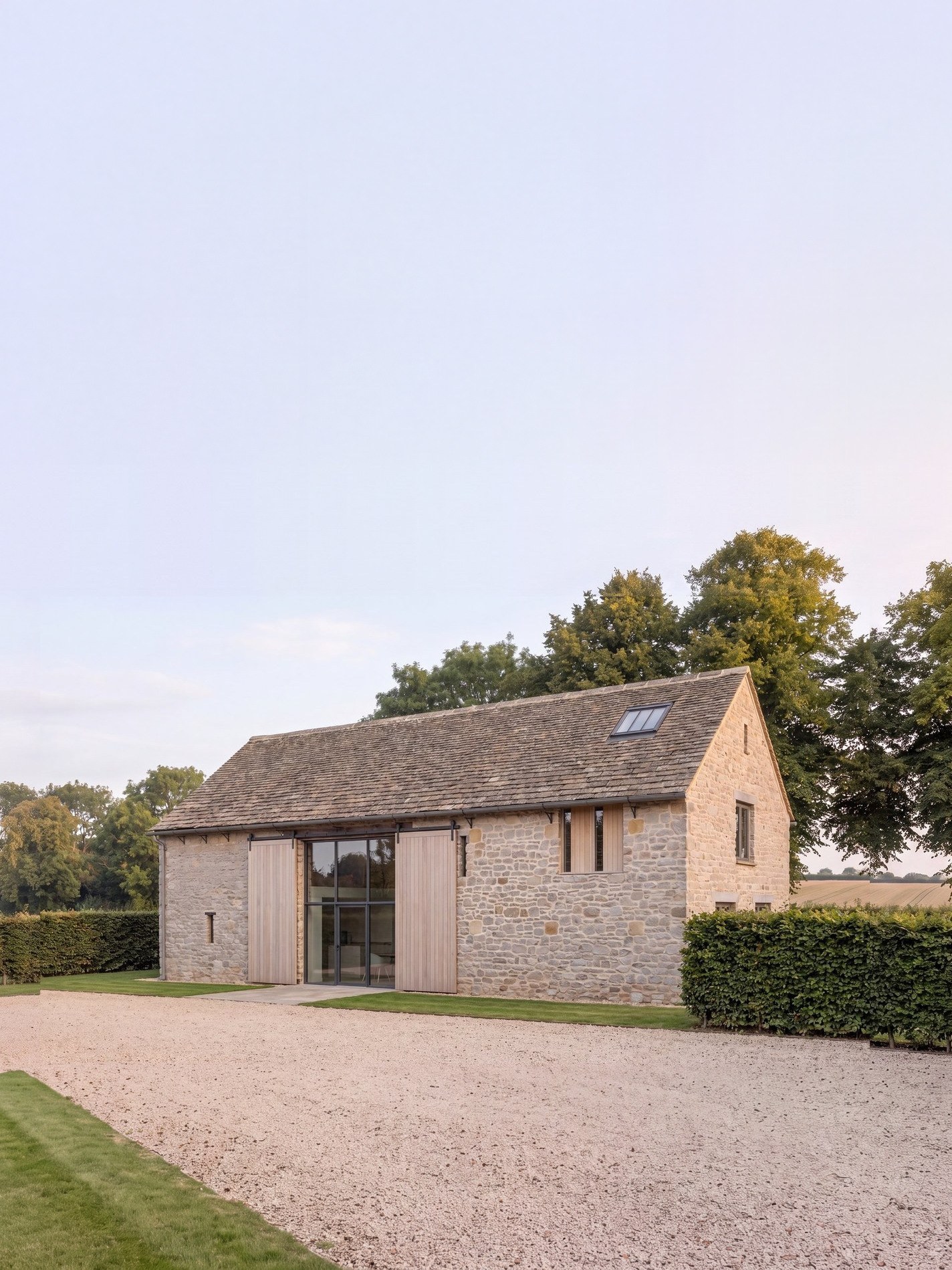
Two consents drawn to lock into each other, in both directions.
View project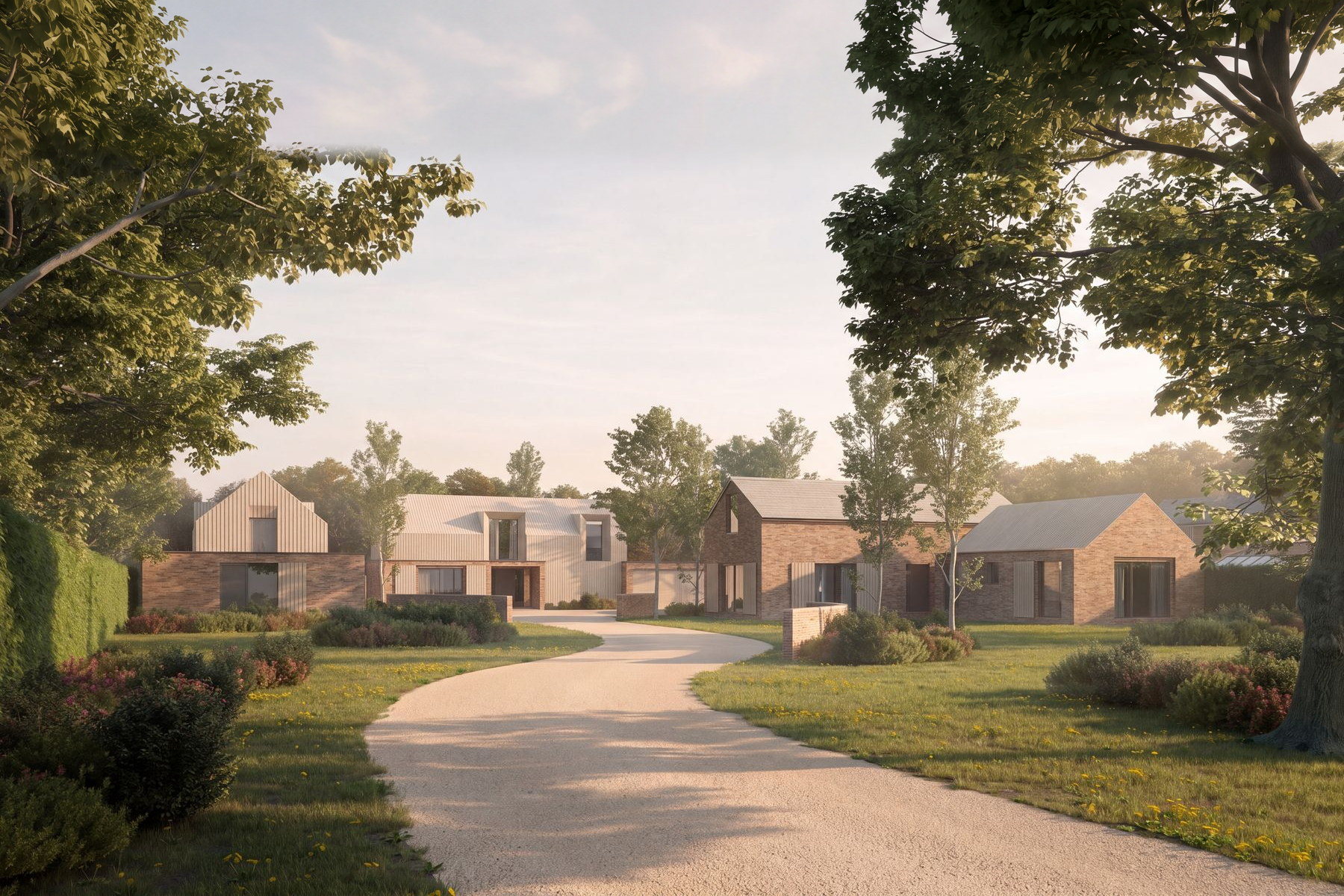
Three homes on a redundant farmyard, and a consent that nearly ran out.
View project
A discouraging pre-application, then consent at the first attempt.
View project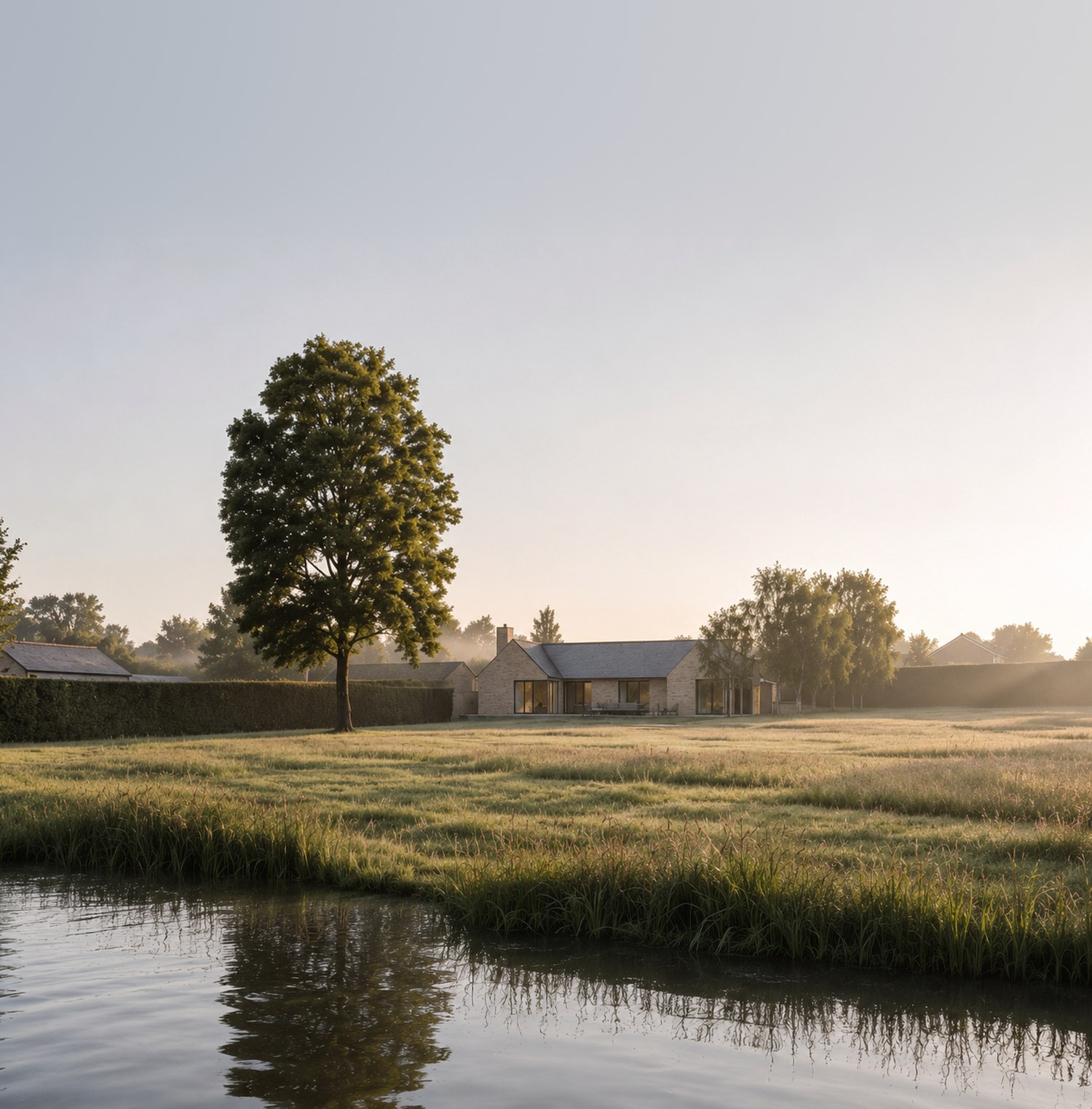
A single-storey home in a conservation area, granted first time and built.
View projectStratford-on-Avon decides on a core strategy adopted in 2016, with no allocations plan behind it and a joint replacement that went to its final consultation in 2026. Six things shape most schemes in the district.
The Core Strategy adopted in July 2016 decides applications. The Site Allocations Plan meant to follow it was withdrawn by full Council in April 2026.
Read moreThe council's own calculation puts the district at 2.43 years of deliverable housing land at 31 March 2026, which opens up well-related sites on the edge of its towns and villages.
Read moreAn Interim Policy Position Statement of 1 June 2026 sets out, policy by policy, what carries weight while the land supply is short. It names the policies that are out of date, and the ones that are not.
Read moreThirty-five per cent is the requirement. Outside ten named parishes the threshold falls to six homes, because most of the district is a designated rural area.
Read moreMade neighbourhood plans cover much of the district and are part of the statutory development plan, but the council's own June 2026 review leaves five carrying full weight on housing supply.
Read moreOn the 2026 indexed rates a scheme of ten homes or fewer is charged 94.93 pounds per square metre. At eleven it is charged 189.86 across the whole scheme.
Read moreStratford-on-Avon District Council policy, correct at October 2026. The housing land figure is restated every year and the South Warwickshire plan had its final consultation in the summer of 2026, so we re-check both at the point of application.
Three homes on a redundant farmyard: the brick barn retained and converted, two new houses beside it. Full permission was granted in December 2021, under four months after it was submitted and without an appeal. When the consent came within weeks of expiring, foundations were laid and the start certified as lawful.
See the work
Every application we make is a matter of public record on a council planning register. Ours reach more than 100 planning authorities across the UK, and Stratford-on-Avon District has been receiving applications in our name since 2000. The practice has been working since 1970.
Developers, homeowners and commercial clients all need the same first answer: what will this site take? The route to it changes with the project.
Village sites, farmsteads and redundant agricultural buildings, from residential architects who design schemes that are viable and buildable, with the planning case built in from the first sketch.
Residential developmentExtensions, remodels and barn conversions, designed around how you live and around the countryside policy that decides what a village or country house may become.
Private homesShops, offices, care schemes and change of use, from commercial architects who argue the case with the evidence Stratford-on-Avon District expects to see.
Commercial workA replacement house built at Priors Hardwick. Three homes consented on a redundant farmyard at Southam. A white lias barn consented as a single house. Yours would not be our first application to this council, or our first building in open countryside.

Straight to a complete, valid submission. The delays that cost a programme are the avoidable ones, not the statutory clock.
A lead architect is involved from the first conversation to the last drawing. The team that starts your scheme stays with it, so nothing is passed down a chain.

An architect who knows what a council needs to see, and when to push back, appraises the site properly and openly.
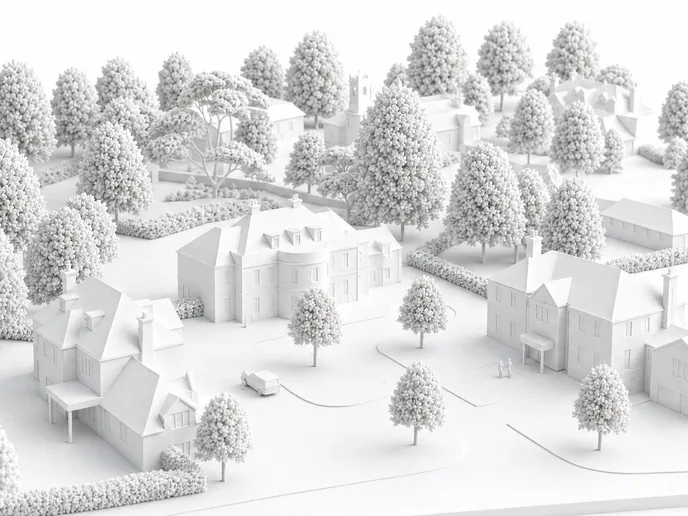
 Conservation area Open countryside
The council has published, policy by policy, what carries weight while its land supply is short. The paragraph of AS.10 that resists other development around villages and in open countryside is out of date for housing, and settlement boundaries in most neighbourhood plans carry significantly reduced weight. That changes what is worth arguing.
 affordable housing housing mix village scale limits countryside restraint
We stage costs behind certainty. Each commitment waits for the decision that justifies it, so nothing is spent on a scheme that has not earned it.
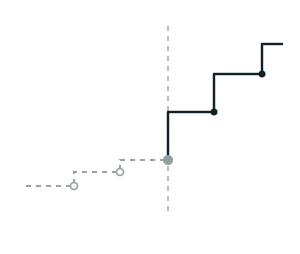 appraisal consent your spend
From first appraisal to final discharge, every survey, report and condition is tracked for you. You are not the one chasing an ecologist in week nine.
 Ecology surveyReport inCondition 7tracked to discharge
Tell us about it and a Senior Architect will give you an initial appraisal and guide you as to what to do next.
Start a conversationYes. Southam, Priors Hardwick, Napton-on-the-Hill, Kineton, Harbury, Wellesbourne, Preston Bagot and Earlswood are all places the practice has worked. Applications in our name have been going to Stratford-on-Avon District Council since 2000, and they sit on the registers of more than 100 planning authorities across the UK.
No, and the gap is a wide one. The council's own calculation puts the district at 2.43 years of deliverable supply at 31 March 2026, against a local housing need of 1,084 homes a year, up from 553 before the standard method changed in December 2024. Under the August 2026 national framework, that opens up well-related housing sites on the edge of the district's towns and villages. Housing inside a town or village starts from a presumption in its favour whatever the supply. Heritage, landscape and highway safety still decide applications here. The figure is restated every year, so check the latest one before you rely on it.
The council has published the answer itself, in an Interim Policy Position Statement endorsed on 1 June 2026. The restrictive paragraph of Policy AS.10, which resists other development around villages and in the open countryside, is treated as out of date where housing is proposed, and stays up to date for everything else. The spatial strategy in CS.15 and the limits on the scale of development in service villages in CS.16 are also out of date. Affordable housing, housing mix, the protection of existing stock and the brownfield policy all still carry full weight.
Thirty-five per cent, and the threshold is lower than most people expect. In ten named parishes, which include Stratford-upon-Avon itself, Southam, Wellesbourne, Kineton and Alcester, provision starts at eleven homes, or at six to ten homes on a site over half a hectare where combined floorspace exceeds 1,000 square metres. Every other parish in the district counts as a designated rural area, and off-site provision is sought from six homes.
It doubles at eleven homes. On the 2026 indexed rates a scheme of ten homes or fewer is charged 94.93 pounds per square metre, and one of eleven or more is charged 189.86 pounds per square metre across the whole scheme, so the eleventh home adds far more to the bill than its own floorspace. Gaydon and Lighthorne Heath, Long Marston Airfield and the Canal Quarter are charged differently, care homes and most other floorspace are nil, and the rate applied is the one in force when the application is determined.
Often, by one of two routes, and they are not interchangeable. Class Q prior approval is a national permitted development right with fixed tests on structure, size and location, decided on a short clock, and its limits were tightened in May 2024. A full planning application is judged against the local plan instead, where the countryside policy now carries less weight for housing. Which route suits a building is worth settling before any drawing is made, because the tests decide what the building can become.
The evidence you have to bring. The district contains 75 conservation areas and more than 3,000 listed buildings, so designation is ordinary here, and a case officer will expect the character of the area to be read properly before a design is proposed. That means a heritage statement identifying what actually contributes to the area, not a paragraph asserting that a scheme is in keeping.
The Stratford-on-Avon Core Strategy 2011 to 2031, adopted on 11 July 2016, is the statutory basis on which every application in the district is determined. It set a requirement of 14,600 homes over its plan period, an average of 730 a year.
What was meant to follow it no longer exists. Full Council resolved on 20 April 2026 to withdraw the Site Allocations Plan, which had reached Revised Preferred Options in 2022, and the statement of withdrawal published on 21 July 2026 withdraws every previous version with it. The district therefore has no site allocations document coming, and none is being progressed.
The replacement is the South Warwickshire Local Plan, prepared jointly with Warwick District Council and running to 2050. Its Regulation 19 consultation ran for seven weeks from 21 July to 8 September 2026. The councils' published timetable set submission for examination by 31 December 2026. An emerging plan gains weight as it advances, so its stage is worth tracking before you buy.
Stratford-on-Avon Core Strategy 2011 to 2031 · Statement of Withdrawal of the Site Allocations Plan, 21 July 2026The arithmetic is in the council's own paper, published in September 2026. On May 2026 data the standard method gives a local housing need of 1,084 homes a year, against 553 under the method used before December 2024. Five years of that is 5,420 homes; a five per cent buffer takes it to 5,691, or 1,138.2 a year. Deliverable supply, with older persons accommodation and a small sites windfall allowance added, comes to 2,764. That is 2.43 years, and a shortfall of 2,927 dwellings.
The buffer is five per cent rather than twenty, because delivery has not been the problem. The district scored 202 per cent on the Housing Delivery Test published in August 2026, so none of the test's consequences apply. What removed the headroom was the requirement roughly doubling while the plan's allocations were already largely built out.
Earlier figures are superseded. The calculation at 31 March 2025, published in March 2026, put supply at 2.21 years. Before that, an interim update of July 2025 reported 5.06 years and an appeal decision in September 2025 found 2.74.
Stratford-on-Avon District Council · 5 Year Housing Land Supply calculation at 31 March 2026, published September 2026It is the most useful document in the district for anyone with a site. Policy AS.10 governs villages and the open countryside; its penultimate paragraph, the one that resists all other development unless certain circumstances are met, is treated as out of date where housing is proposed. The same policy stays up to date for non-residential proposals.
CS.15, the spatial strategy, is out of date in that respect, while the parts of it encouraging brownfield development and local needs schemes are not. CS.16 provides for too few homes, so delivery above its approximate targets may be acceptable and its limits on the scale of development in four categories of service village are treated as restrictive. CS.21, on Gypsy and Traveller sites, is out of date as far as residential accommodation is concerned.
What survives intact matters just as much: CS.18 on affordable housing, CS.19 on housing mix, CS.20 on existing stock, CS.17, AS.11 on brownfield and the area strategies are all treated as largely up to date. Out of date does not mean irrelevant either. The statutory duty to have regard to the development plan remains, and it is the weight that changes, case by case.
Stratford-on-Avon District Council · Interim Policy Position Statement, 1 June 2026Policy CS.18 seeks 35 per cent affordable housing, and the council's April 2026 review concluded that nothing in the evidence base suggests the target is no longer required. It is one of the policies that keeps full weight.
The threshold is set by a Position Statement of September 2019, which reconciled CS.18 with the national threshold introduced by the 2018 Framework. In Alcester and Kinwarton, Bidford-on-Avon, Henley-in-Arden and Beaudesert, Kineton, Shipston-on-Stour, Southam, Stratford-upon-Avon, Studley and Mappleborough Green, Tanworth-in-Arden and Wellesbourne, provision is sought on sites of eleven homes or more, and on sites of six to ten homes that exceed half a hectare with combined gross floorspace over 1,000 square metres.
Every other parish is a designated rural area for these purposes, and there off-site provision is sought from six homes upwards. Most of this district is in that second category, so a village scheme of six or seven houses carries a contribution that the same scheme would not carry in a neighbouring authority.
Core Strategy Policy CS.18 · Position Statement on affordable housing, September 2019The Interim Policy Position Statement counts thirty-two made neighbourhood plans in the district, which is heavy coverage by any standard. Policy S6 of the national framework published in August 2026 protects a neighbourhood plan against housing that conflicts with it only where two things are true at once: it became part of the development plan five years or less before the decision, and it contains allocations to meet its own housing requirement.
On the council's analysis, sixteen plans fail the age test outright. Nine more are recent but make no housing allocations at all. Of the seven that pass both, five are judged to remain up to date on housing supply: Clifford Chambers and Milcote, Ilmington, Long Marston, Quinton and Tysoe. Southam and Tanworth-in-Arden are not.
The practical consequence is specific. Where a plan's housing supply policies are out of date, it is the defined settlement boundary that carries significantly reduced weight, which is precisely the line a village site usually sits outside. Positive policies in those plans keep their weight, so the plan is still worth reading closely rather than setting aside.
Interim Policy Position Statement, 1 June 2026 · section 5, review of made neighbourhood plansThe charging schedule took effect on 1 February 2018 and is index linked each year to the RICS Community Infrastructure Levy Index. The 2026 rates are 26.58 per cent above the 2018 base, using an index figure of 400 against 316.
For residential development the district splits three ways. Small sites, meaning up to and including ten units, are charged 94.93 pounds per square metre. The rest of the district at eleven units or more is charged 189.86. The Canal Quarter Regeneration Zone at eleven units or more is charged 107.59. The two strategic growth locations, Gaydon and Lighthorne Heath and Long Marston Airfield, are charged nothing at all, because their infrastructure is secured by agreement instead. Out of centre retail is charged 151.89; retail inside identified centres, care homes and all other liable floorspace are nil.
Two things follow. The step from ten homes to eleven applies the higher rate to the whole scheme rather than to the extra house, so it is worth testing a scheme either side of that line before the layout is fixed. And the rate that applies is the one in force when the application is determined, not when it is submitted, so a decision that slips across a January boundary changes the bill.
Stratford-on-Avon District Council · Annual CIL Rate Summary for 2026






Tell us about your project
A Senior Architect will reply. We will give you an initial appraisal and guide you as to what to do next.