Two plans, one decision.
The Local Plan adopted in September 2017 still decides every application. The joint plan written to replace it is not adopted.
Read morePeriod homes, apartments and town-centre sites. Find out what yours will take.
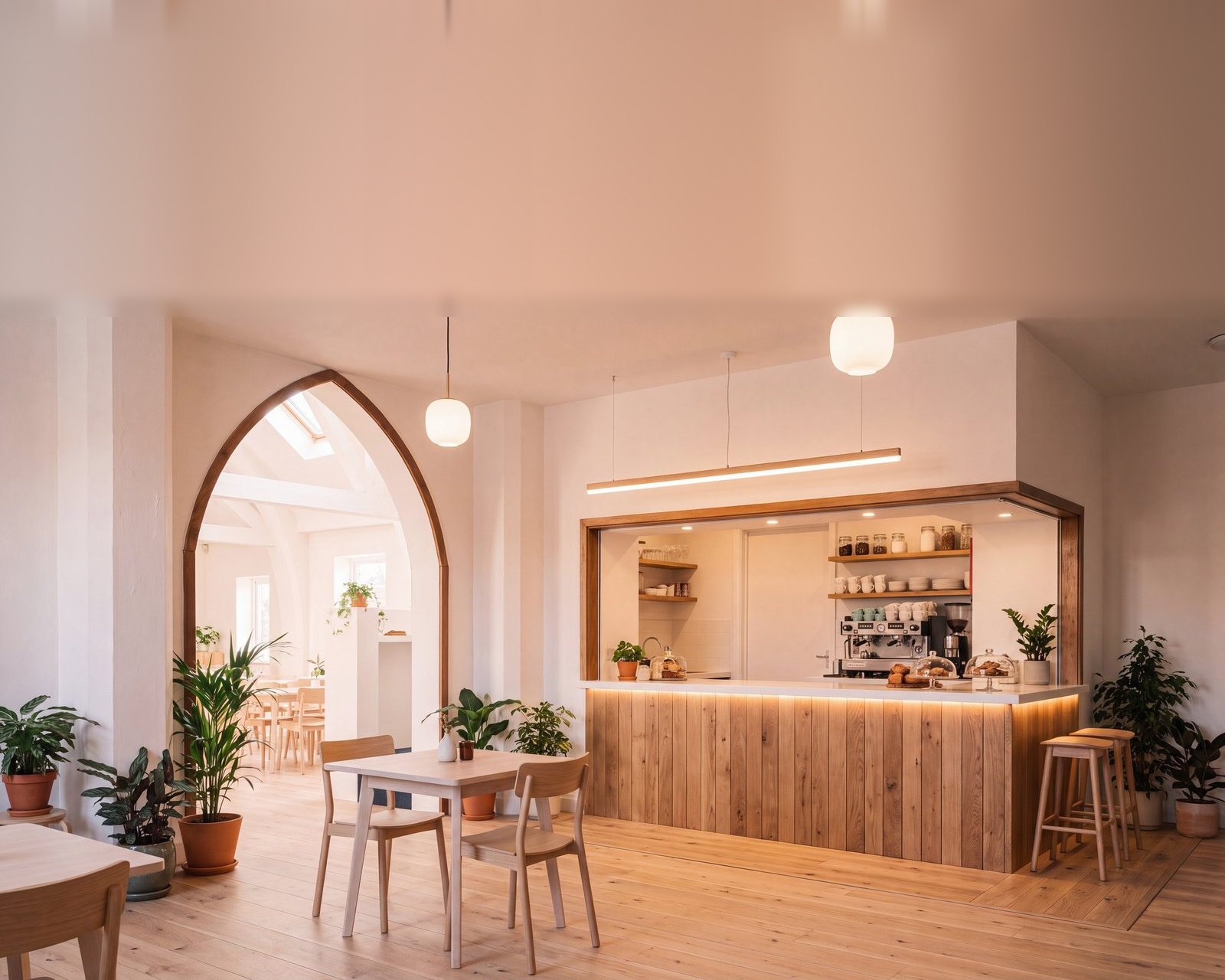
Granted at committee, over twelve objections. A former chapel made to hold more people.
View project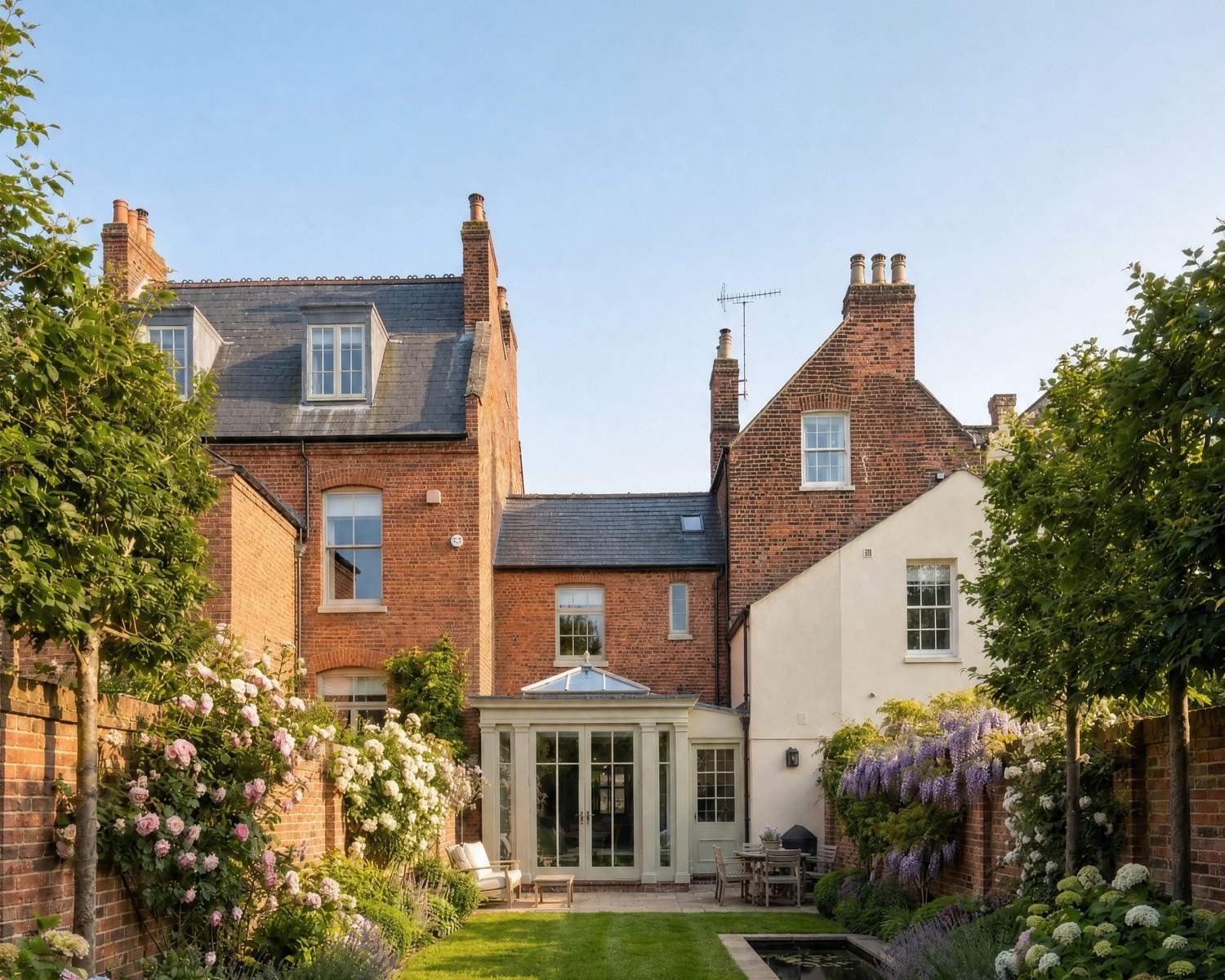
Two listed building consents, both granted. A new garden wall and an orangery.
View project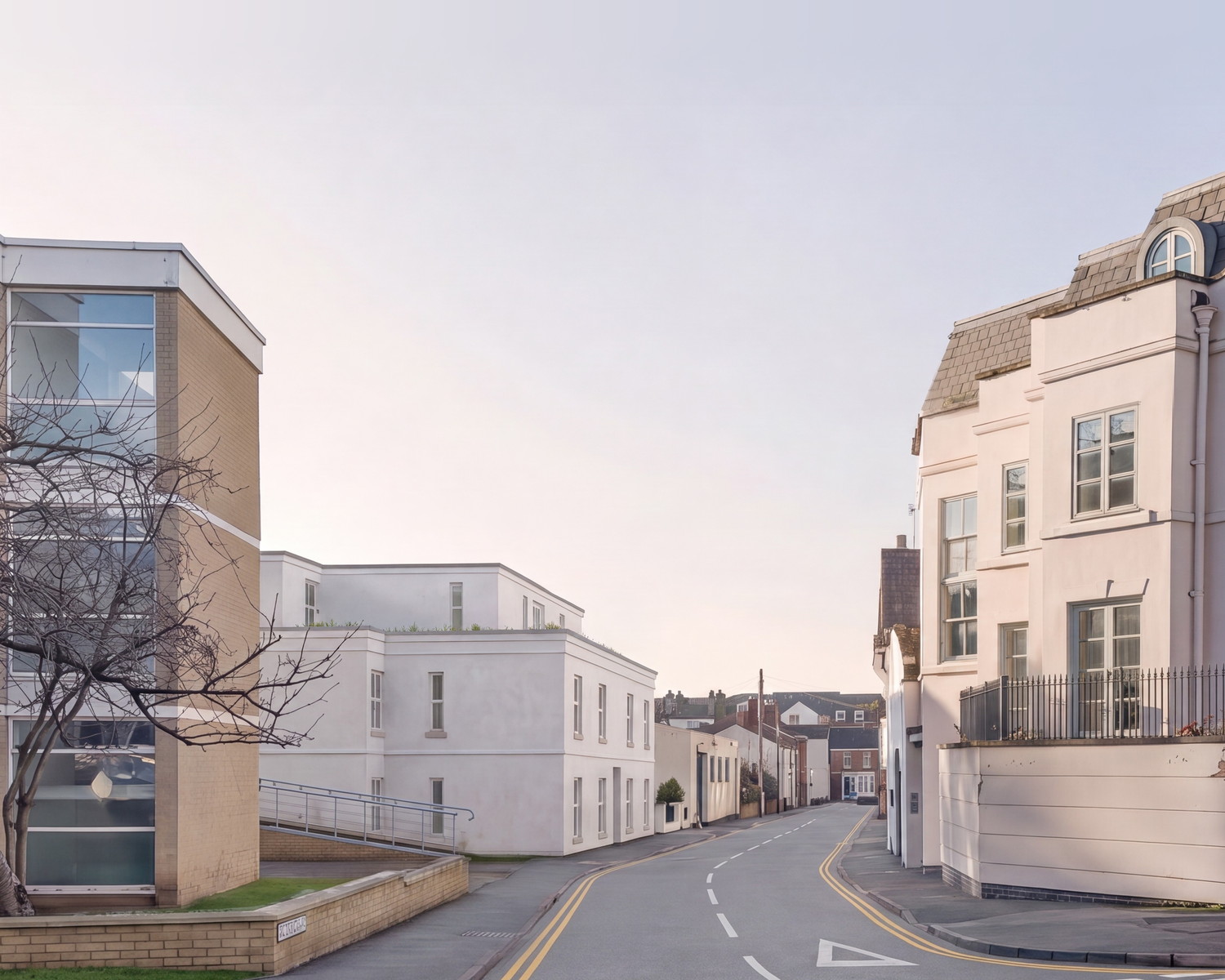
Eight apartments complete and sold, on a town-centre plot a refusal had stalled.
View project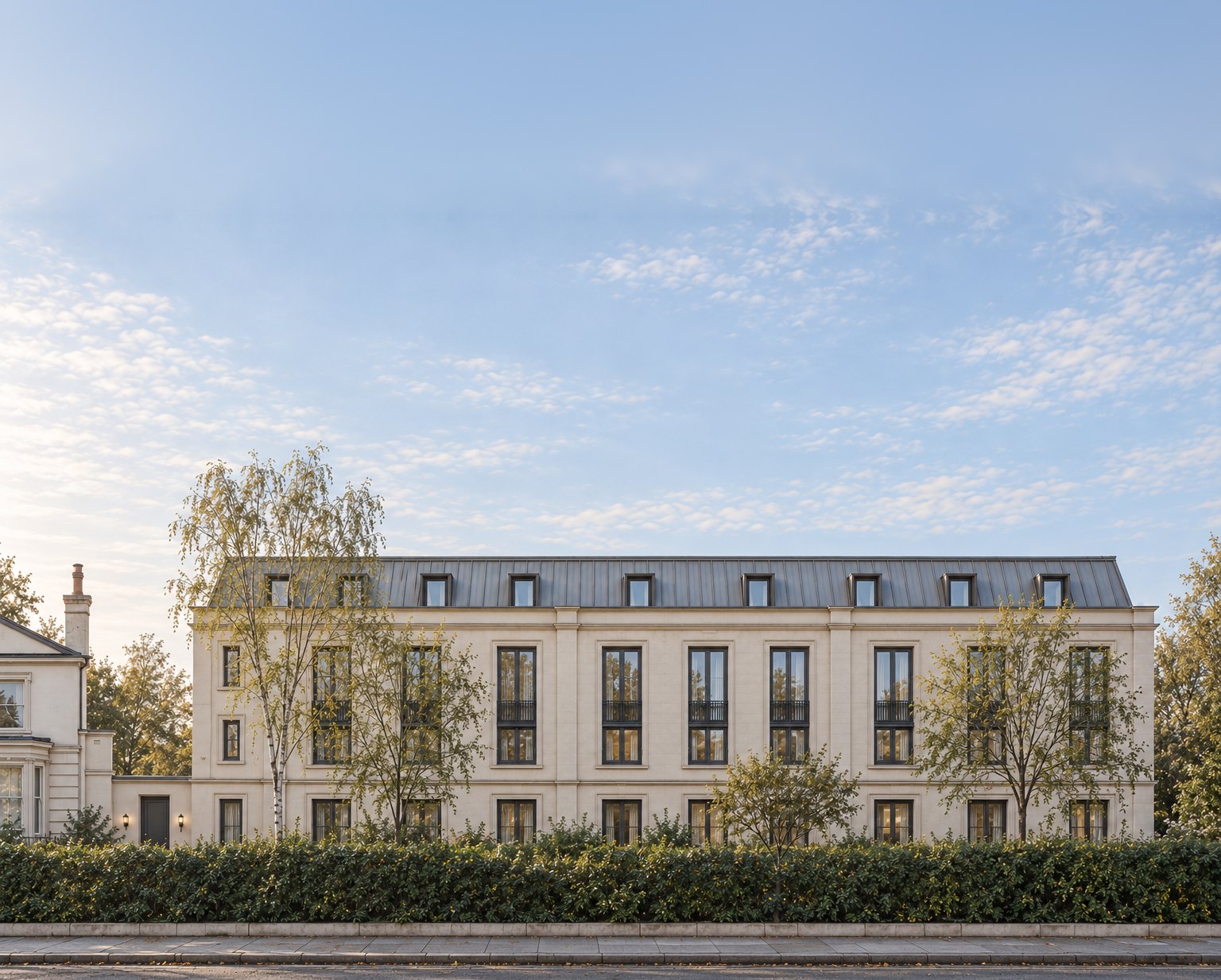
An office building taken to apartments by prior approval, then five more consents for the works.
View project
A former NHS building made eight flats in a conservation area, its Victorian front put back.
View project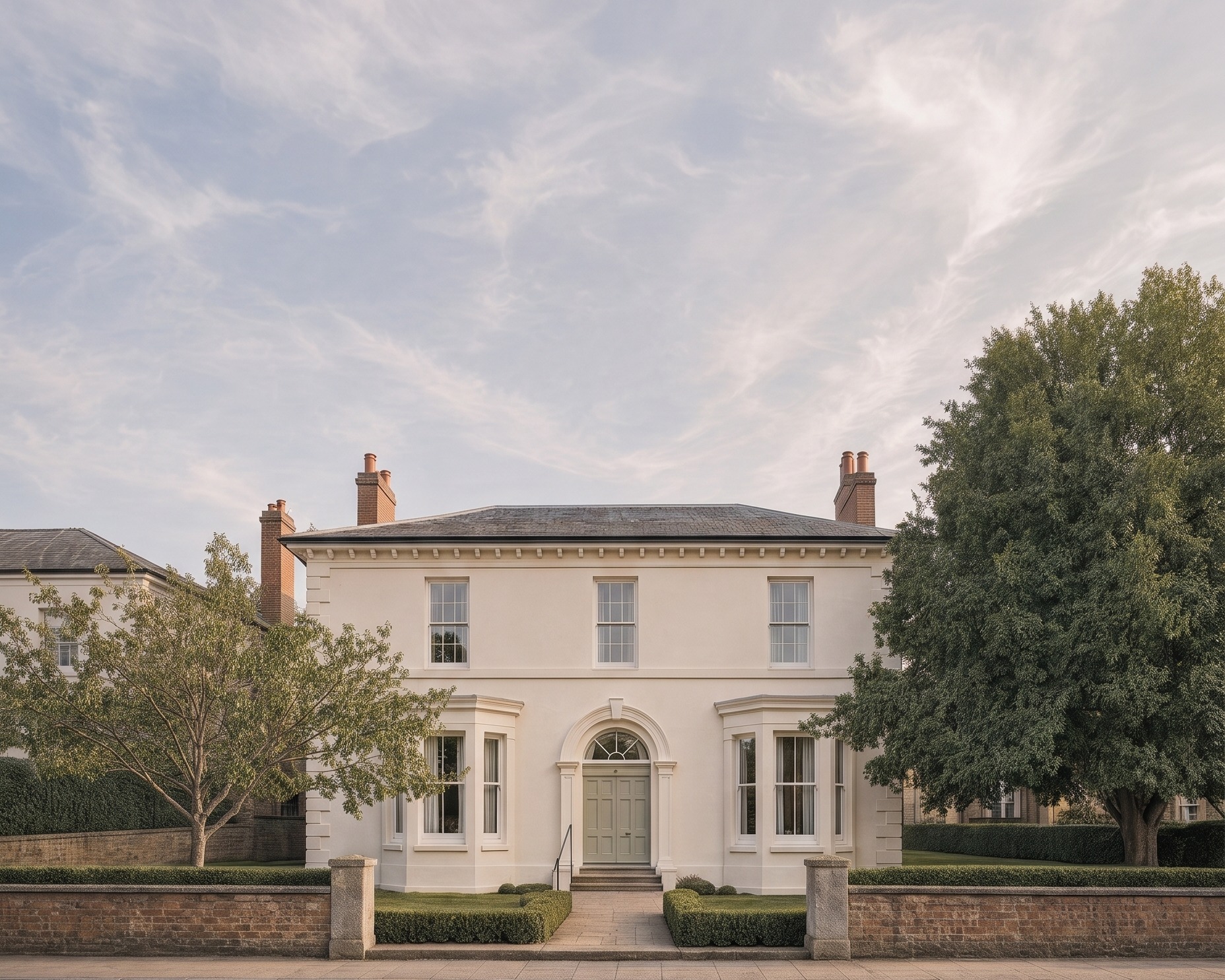
A 22-bed student HMO consented as eight self-contained flats, in a conservation area.
View projectWarwick District Council decides on a 2017 plan while a joint replacement is being written, and Leamington's Regency streets add a layer on top. Six things shape most schemes here.
The Local Plan adopted in September 2017 still decides every application. The joint plan written to replace it is not adopted.
Read moreWarwick District measured 1.96 years of housing land supply at April 2025, against the five years national policy asks for.
Read morePolicy H2 asks for 40 per cent affordable housing on schemes of eleven dwellings or more, or over 1,000 square metres.
Read morePolicy HE2 sets a presumption in favour of keeping unlisted buildings that add to a conservation area. Demolition needs a case.
Read moreThe council will consider setting its retail protection aside where a unit has been vacant and properly marketed for over twelve months.
Read moreCommunity Infrastructure Levy is charged by the square metre, and most of the town falls in the district's highest residential zone.
Read moreWarwick District Council policy, correct at August 2026. The joint South Warwickshire plan and the levy schedule both move, so we re-check them at the point of application.
Granted in Leamington Spa alone, on Regency terraces, a former chapel and the streets between them. A hundred and twenty-one applications granted across Warwick District, going back to 2003.
View project
Every application we make is a matter of public record on a council planning register. Ours reach more than 100 planning authorities across the UK, and 121 have been granted in Warwick District alone. The practice has been working since 1970.
Developers, homeowners and commercial clients all need the same first answer: what will this site take? The route to it changes with the project.
Apartments, conversions and town-centre infill, from residential architects who design schemes that are viable and buildable, with the planning case built in from the first sketch.
Residential developmentExtensions, remodels and new houses, including listed homes and Regency terraces inside the town's conservation areas, designed around how you live.
Private homesShops, offices, community buildings and mixed-use conversions, from commercial architects who argue the case with the evidence Warwick District expects to see.
Commercial workEight apartments complete and sold on Cross Street. A chapel taken through committee over twelve objections. Yours would not be our first Leamington conservation-area argument, or our first buried constraint.

Straight to a complete, valid submission. The delays that cost a programme are the avoidable ones, not the statutory clock.
A lead architect is involved from the first conversation to the last drawing. The team that starts your scheme stays with it, so nothing is passed down a chain.
Appraised properly, in the open, by someone who knows what a council needs to see and when the right answer is to push back.
 Listed TPO
Twenty-two listed building consents granted in Leamington Spa. The heritage statement is written in house while the scheme is being drawn, so the case and the design say the same thing.
 heritage statement listed building consent planning permission conservation area
Costs staged behind certainty. Every commitment sits behind the decision that justifies it, so nothing is spent on a scheme that has not earned it.
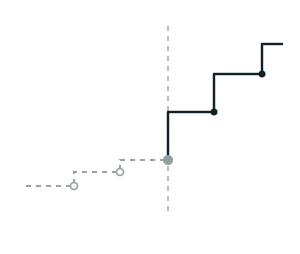 appraisal consent your spend
From first appraisal to final discharge, every survey, report and condition is tracked for you. You are not the one chasing an ecologist in week nine.
 Ecology surveyReport inCondition 7tracked to discharge
Tell us about it and a Senior Architect will give you an initial appraisal and guide you as to what to do next.
Start a conversationYes, and for a long time. Sixty Leamington addresses have one of our consents behind them, from Regency terraces to town-centre apartment buildings, and a hundred and twenty-one applications have been granted across Warwick District. You get local architects on your site, backed by a national record.
Warwick District is exacting rather than difficult, and its validation requirements are stricter than most. It rewards a scheme that arrives complete and evidenced, and it publishes enough of its own guidance that there is no excuse for guessing.
Usually, yes. Listed building consent is a separate application from planning permission, and both are normally needed. Twenty-two listed building consents have been granted to us in the town, so the route is well travelled.
Policy H2 asks for 40 per cent affordable housing on residential sites of eleven dwellings or more, or where the combined gross floorspace is over 1,000 square metres. The amount and the mix are negotiated at application, and viability is part of that negotiation.
It can, with the right evidence. The council will consider setting its secondary retail policy aside where there is thorough evidence that a unit has been vacant and actively and appropriately marketed for over twelve months, and it will expect the new use to keep an active frontage. Start that marketing trail early.
It does, per square metre of new floorspace, and the rate depends on which charging zone the site sits in. Most of Leamington falls in the district's highest residential band, so the levy needs to be in the appraisal before a price is agreed, not after.
Sometimes, and sometimes the better answer is to redesign. On Cross Street a refusal was answered by changing the building, not by arguing harder. We read the refusal on its merits and give a straight view before you commit to the process again.
The Warwick District Local Plan 2011 to 2029 was adopted in September 2017 and remains the statutory basis on which every application in Leamington Spa is determined. Stratford-on-Avon and Warwick District Councils are preparing a joint South Warwickshire Local Plan to replace its strategic policies, running to 2050.
That joint plan is not adopted. In June 2026 the councils agreed a delay to its Regulation 19 consultation so that further work could be done on housing numbers, affordable housing and viability, with submission to the Secretary of State targeted for the end of 2026. Until it is adopted the emerging plan is a material consideration rather than the decision-maker, and its weight grows as it advances. We design to the adopted plan and check where the emerging one has actually reached at the point of application, not months before it.
Warwick District Local Plan 2011 to 2029 · South Warwickshire Local PlanThe council's own five year housing land supply paper put the district at 1.96 years of supply as at 1 April 2025, against a five year requirement of 5,696 dwellings and an identified supply of 2,230. National policy asks every authority to hold at least five years.
Under the national framework published in August 2026, housing inside a settlement should be approved unless the benefits are substantially outweighed by the harm, whatever the supply. A shortfall on this scale also opens up housing on the edge of a settlement outside the Green Belt, where it is well related and the infrastructure can take it. It is a presumption, not a waiver. Decisions in this district still turn on heritage, highway safety, town-centre vitality and whether a site is being used efficiently, so the shortfall works best as one argument inside a scheme that is already close to policy, never as the whole case.
Warwick District Council · 5 Year Housing Land Supply Paper 2025Policy H2 is direct. Residential development on sites of eleven or more dwellings, or where the combined gross floorspace is more than 1,000 square metres, will not be permitted unless provision is made for 40 per cent affordable housing.
The amount, the form of provision, its location on the site and the means of delivery are all negotiated at the time of the application, and viability is a legitimate part of that negotiation. On its housing market evidence the council normally expects the affordable element to be 60 per cent social rented, 25 per cent affordable rented and 15 per cent shared ownership. Testing that against your appraisal before the layout is fixed is what stops a scheme being redesigned twice.
Policy H2 · affordable housingMuch of central Leamington sits inside the Royal Leamington Spa Conservation Area, and Policy HE2 sets a presumption in favour of the retention of unlisted buildings that make a positive contribution to its character and appearance. Alterations or extensions that would adversely affect that character will not be permitted, and consent to demolish an unlisted building is only given where the replacement design earns it.
Policy HE3 goes further on locally listed assets, expecting traditional detailing and materials, and notes that Article 4 directions may be used inside and outside conservation areas. So the starting position on a Leamington property cannot be read off the national permitted development rights. It has to be checked against the designation, any listing and any direction sitting over it, and on a period home that check is the first thing we do.
Policies HE2 and HE3 · Royal Leamington Spa Conservation AreaPolicy TC7 protects the district's secondary retail areas, and its supporting text sets out the way round. Where there is thorough evidence that a unit has been vacant and actively and appropriately marketed for over twelve months, the council will consider setting the requirements of the policy aside and allowing other uses, and it will expect the new use to include an active frontage.
That wording is read literally. A case usually fails on the marketing file rather than the design: a unit marketed only as an office, only to let, with no record of enquiries, viewings or price realism. The flexibility genuinely exists, but only for an applicant who builds the evidence like a case file from the first month. If a change of use is anywhere in the plan for a town-centre unit, start the trail now.
Policy TC7 · secondary retail areasWarwick District charges Community Infrastructure Levy by the square metre of new floorspace, by zone, alongside any Section 106 obligations. On the schedule that took effect on 1 January 2026 the residential rates are £92.41 a square metre in Zone A, which covers Warwick and the east of Leamington, £184.82 in Zone C, which is Kenilworth, and £257.43 in Zones B and D, which cover much of Leamington and Whitnash.
Two things follow. Leamington carries the district's highest residential rate, so on any scheme of scale the levy is a real line in the appraisal rather than a rounding. And the schedule is indexed each year to the RICS tender price index, so the rate that applies is the one in force when the application is determined. Check the live schedule before a price is agreed on a site.
Warwick District CIL charging schedule, effective 1 January 2026







Tell us about your project
A Senior Architect will reply. We will give you an initial appraisal and guide you as to what to do next.