Changes of use that clear planning
We settle what the building lawfully is first, because that decides which route is open.
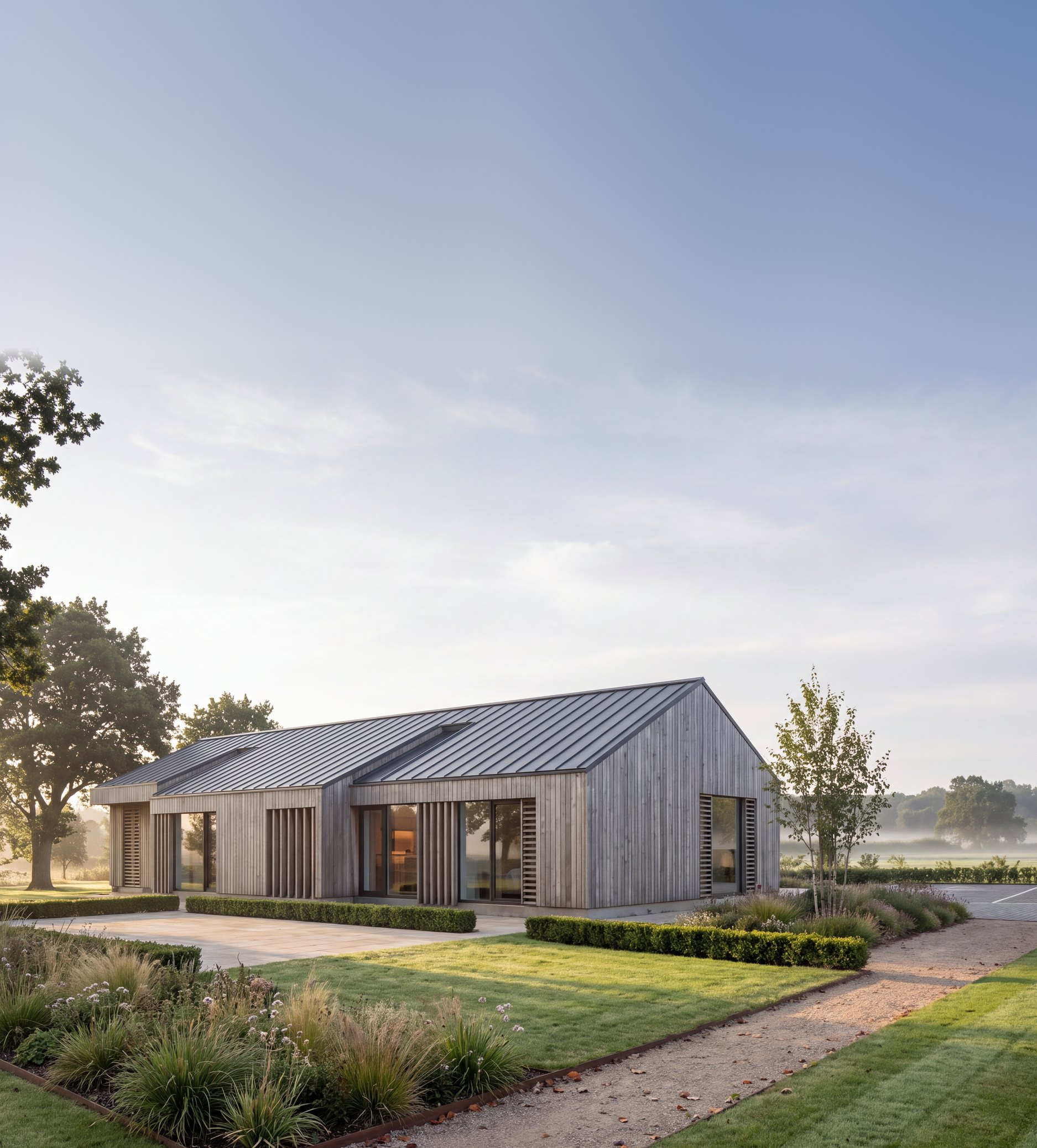
Warwickshire Farm Store
A post-war store applied for as B8 storage, certified as a household's store, and granted full permission for two homes in April 2026.
View project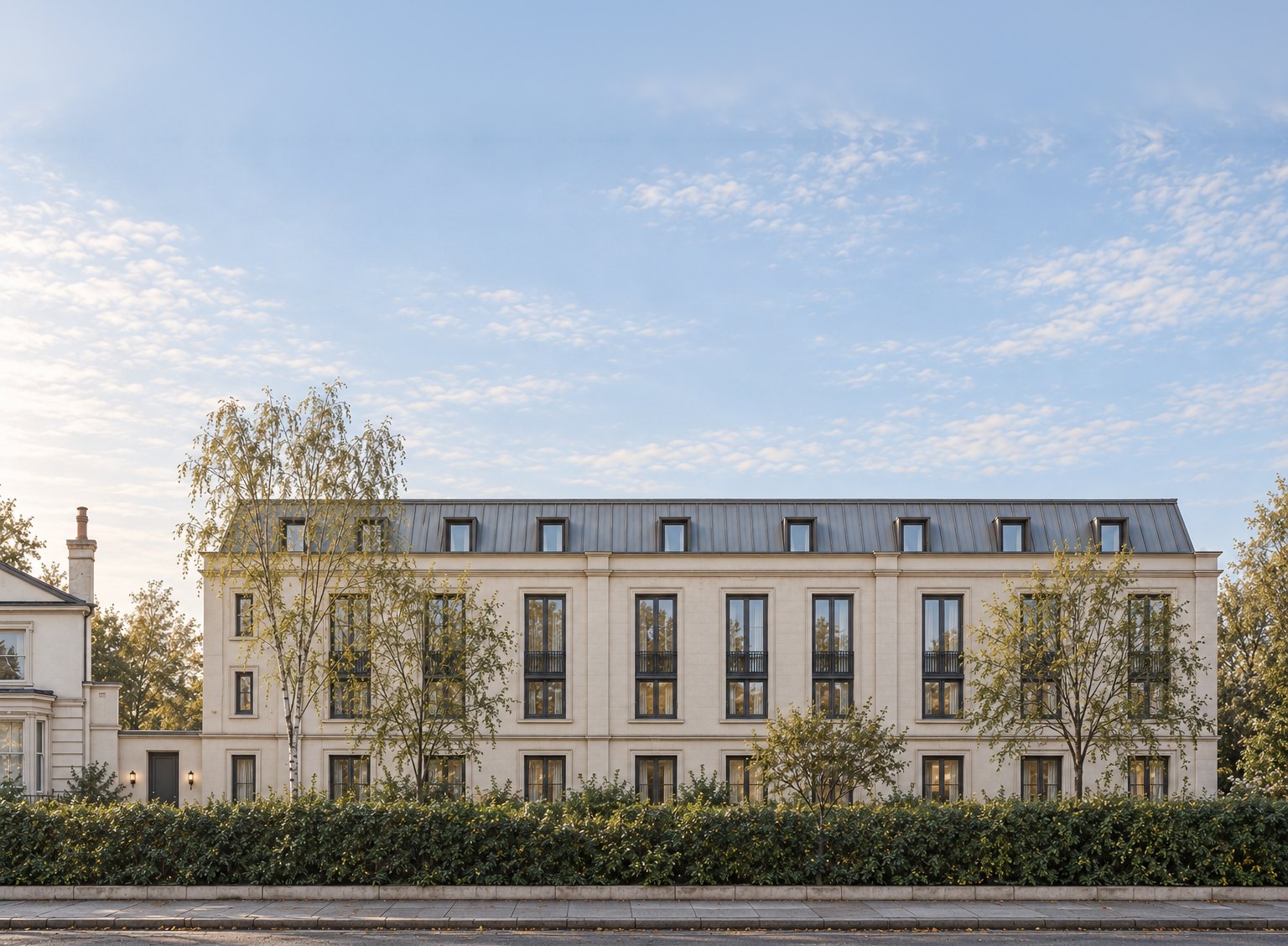

Brandon Parade
An office building in a conservation area, taken to apartments by Class O prior approval in 2019, then five more consents for the works.
View project

Stratford Road
A three-storey furniture store on the A34, converted and extended into 18 apartments with a commercial unit kept at the street front. Granted in February 2021.
View project

Avenue Road
A former NHS building in a conservation area, converted to eight flats with its lost Victorian front put back. Granted in April 2016 and built.
View project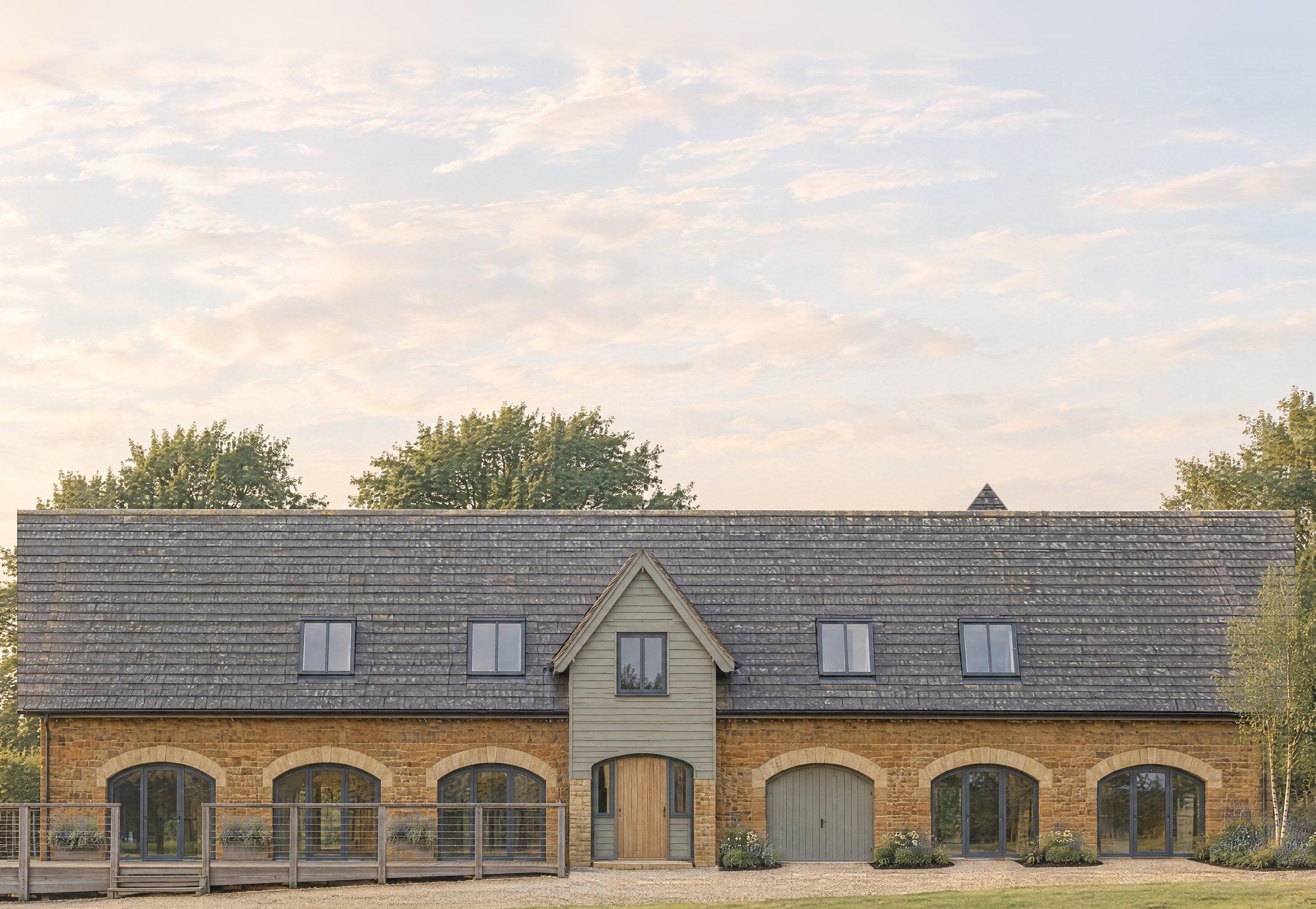

Northamptonshire Wedding Venue
A two-storey stone wedding venue in open countryside, granted permission in July 2026 to become one four-bedroom home. No marketing test was needed.
View projectGet to know the route.
 Before you commit · 01
What the building lawfully is.
The last lawful use counts, whatever the deeds, rates bill or last owner say. Every route starts from that answer, so it is settled first.
Read more → The use classes · 02
Some changes are not development.
Moving between uses in one class needs nothing. Since September 2020 shops, offices, cafes, gyms and clinics have all shared Class E.
Read more → The shortcut · 03
Permitted development, and its limits.
A national right may allow the change through prior approval on named matters. Offices to homes under Class MA is the one that gives the most homes.
Read more → The full application · 04
When only an application will do.
A material change that no right reaches is decided on its merits, in one application that carries the building work, the parking and the layout.
Read more → Proving what you have · 05
A certificate, not a permission.
Where a use has run openly for long enough, a lawful development certificate puts it beyond argument. It is what a buyer or lender asks to see.
Read more →Use certified, then granted.
A Warwickshire farm store, applied for as B8 storage, was shown to be a household's store and granted as two homes inside its frame.
Send us the building. A director replies with an honest view of which route is open to it, before anything significant is spent.
→ Start a conversation
The farm store's use was certified on 3 April 2026, and full permission for two homes followed on 13 April 2026, with fourteen conditions.
More
Not every change needs an application, and the ones that do not are better found early. Rickett Architects has worked since 1970, with more than 2,500 projects behind it.
What the building lawfully is.
Every change of use starts from the use the building lawfully has, and that is narrower than most owners expect. It is the last use the building had lawfully. The deeds, the rates bill and the seller's description can each say something different, and none of them decides it. A use that began without permission and has run openly for long enough can have become lawful in its own right. Where there is any doubt, that question is settled before anything else, because it decides which of the routes below is open.
On a Warwickshire farmstead, the store we were asked to convert was first applied for as a change from storage and distribution, use class B8. Read that way it was a business building, and the council asked for six months' marketing before it would validate the application. For twenty-five years it had in fact held a household's mowers, bikes and boats, and that use was later certified. The building was the same either way. The tests were not. Read the project.
Some changes are not development.
Only a material change of use needs permission, and the Use Classes Order removes a large share of changes from the question entirely: a move between two uses in one class is not development at all. The 2020 reforms made that share far bigger. Class E covers shops, cafes and restaurants, offices, financial and professional services, clinics, gyms, nurseries, research and development, and light industry that does no harm to a residential area. A shop that becomes a cafe, or an office that becomes a clinic, needs no application.
Outside the classes sit the sui generis uses, which have no class to move within: pubs, hot food takeaways, cinemas, theatres, petrol stations, scrapyards and a house in multiple occupation shared by more than six people, among others. Two cautions apply to the freedom inside a class. It covers the use, not the building, so a new shopfront or an extract flue may need permission of its own. And a condition or a section 106 agreement on an earlier permission can rule out a particular use within the class, so the national position is where the enquiry starts, not where it ends. Read which changes need permission.
Permitted development, and its limits.
Where a change is development, a national permitted development right may still allow it, subject to prior approval on named matters only. Class MA takes a building in Class E use to homes, provided it has been in that use for at least two continuous years. Since 5 March 2024 there is no upper limit on floorspace and no requirement for the building to have stood vacant. What remains is a prior approval that looks at transport, contamination, flooding, noise, natural light and fire safety, among other matters.
None of it is automatic. The right does not reach a listed building, a scheduled monument, a National Park, a National Landscape, the Broads, a World Heritage Site or a site of special scientific interest, and in a conservation area the effect of a ground-floor change on its character is itself a matter for approval. A council can also withdraw it locally with an Article 4 direction, as many town centres have. Agricultural buildings have their own right, Class Q, and a house can become a small house in multiple occupation under Class L unless an Article 4 direction says otherwise. Office to residential.
When only an application will do.
If the change is material and no permitted development right covers it, a full planning application decides it on its merits. That usually takes longer than a prior approval and the council can weigh more, but one consent then covers the use, the works, parking and layout together. The Act never says what makes a change material: it is a matter of fact and degree, and officers judge what really changes on the ground, from traffic, parking and deliveries to hours, noise and the character of the area.
Losing a use the plan wants to keep decides more cases than people expect: an employment or community use often brings a test of its own, and the farm store on this page drew a request for six months' marketing for exactly that reason. On any building, so does how the new use is described. A use that genuinely serves a main use is part of it, and that line moves gradually, so describing the intended use accurately at the start is far cheaper than defending the drift afterwards.
A certificate, not a permission.
A lawful development certificate is a formal decision that a use or a piece of development is lawful. It grants nothing new. Under section 191 it confirms what already exists; under section 192 it confirms that something proposed would be lawful without an application. In England, enforcement action against most breaches of planning control must be taken within ten years, a limit that since 25 April 2024 also covers new building work and a change to a single home. Where a use has run openly and continuously for longer than that, a certificate puts it beyond argument, and the burden of proof rests with the applicant.
Evidence is most of the work. On the Warwickshire farmstead the application rested on sworn declarations, photographs and aerial images from 2010 onwards. The council certified the store's use as ancillary domestic storage on 3 April 2026, and on 13 April it granted full permission for its conversion to two dwellings, described in the same words. Read the project.
Questions? Start here.
Straight answers to what people ask first about changing what a building is used for.

Do I need planning permission for a change of use?
Only when the change is material. Moving between uses in the same class is not development, so a shop that becomes a cafe within Class E needs nothing. A change between classes, or into or out of a sui generis use, usually needs an application unless a permitted development right covers it.
Read the guide→
What is a lawful development certificate?
A formal decision that a use or development is lawful, not a permission. Section 191 covers what already exists and section 192 what you propose. In England, enforcement against most breaches must be taken within ten years, so a use that has run openly for longer can be certified.
View the project→
Which use class is my building in?
In England, the class of its last lawful use: B2 general industry, B8 storage or distribution, C1 hotels, C2 and C2A residential institutions, C3 dwellinghouses, C4 small HMOs, E commercial, business and service, F.1 learning and non-residential institutions, or F.2 local community uses. Anything else is sui generis.
Read the guide→
Can permitted development cover my change of use?
Sometimes. Class MA can take a Class E building to homes through prior approval, Class Q does the same for agricultural buildings, and Class L lets a house become a small house in multiple occupation. Class MA and Class Q are not automatic, and an Article 4 direction can remove any of the three locally.
Office to residential→
What does the council look at on a change of use?
Whether the change is material, then its effects: traffic and parking, hours, noise, deliveries and the character of the area. Losing an employment or community use can bring a test of its own, such as evidence that the building has been marketed.
View the project→
What does a change of use architect cost?
You do not commit to the whole thing on day one. The initial appraisal of the building's lawful use and the route open to it, and the written fee that follows it, are both free. The application and the design are then quoted separately, so you decide how far to go.
Read more→
Have you handled changes of use like mine before?
Changes of use run through the practice's work: houses in multiple occupation taken to flats, health buildings and storage premises taken to homes, and a house taken to offices. Every application we make in our own name is on a council register, across more than 100 planning authorities.
See the work→Where the rules on this page come from: Town and Country Planning Act 1990, sections 55, 171B, 191 and 192 · Use Classes Order 1987, as amended in 2020 · Permitted Development Order 2015, Schedule 2, Part 3 · Planning Practice Guidance, When is permission required.