Barn conversions that clear prior approval
Whether the barn qualifies is settled before the drawings start, not after.
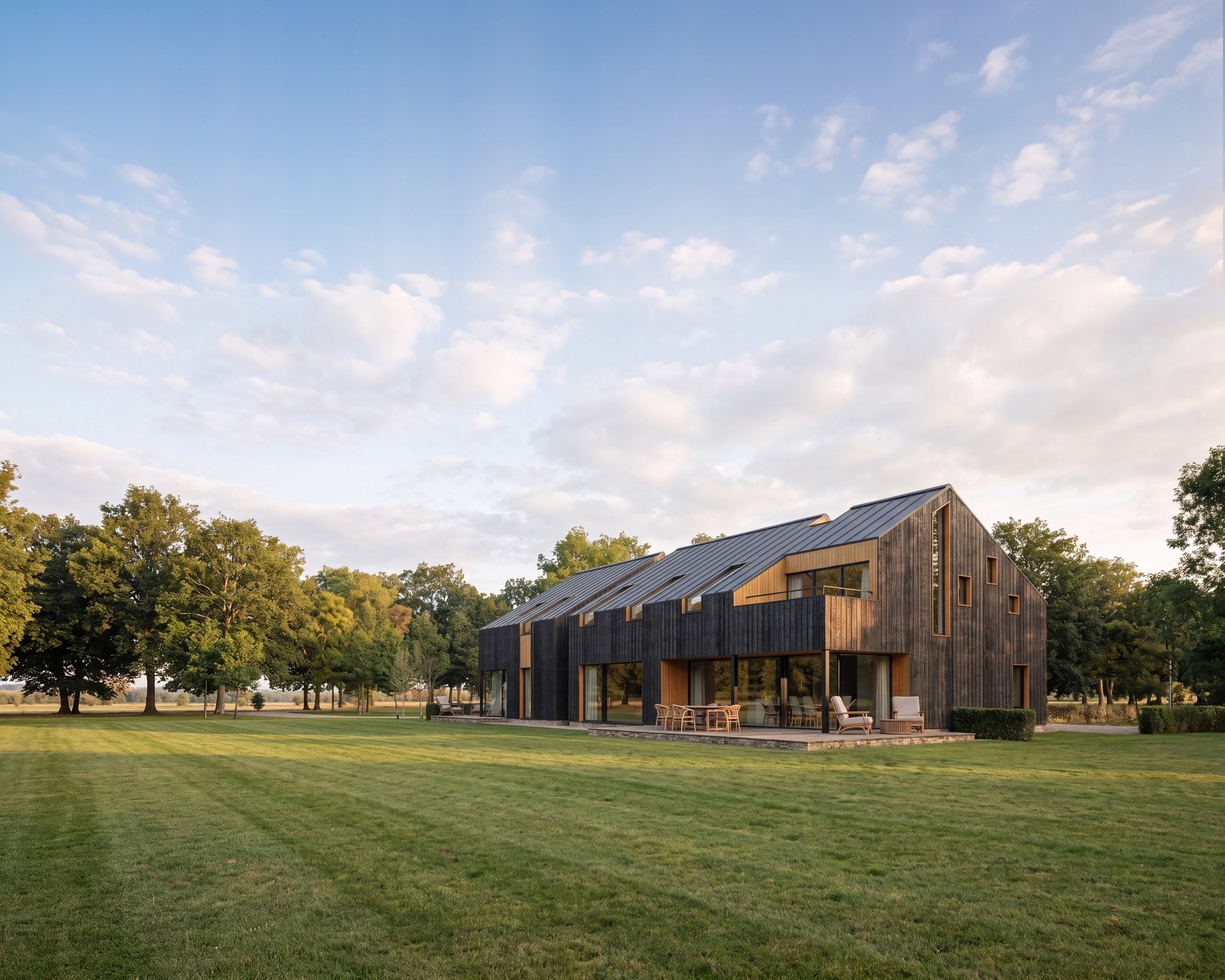
Green Gate Barns
A redundant steel-framed barn with one side open to the weather, converted into two houses within the original shell. Prior approval in forty-three days.
View project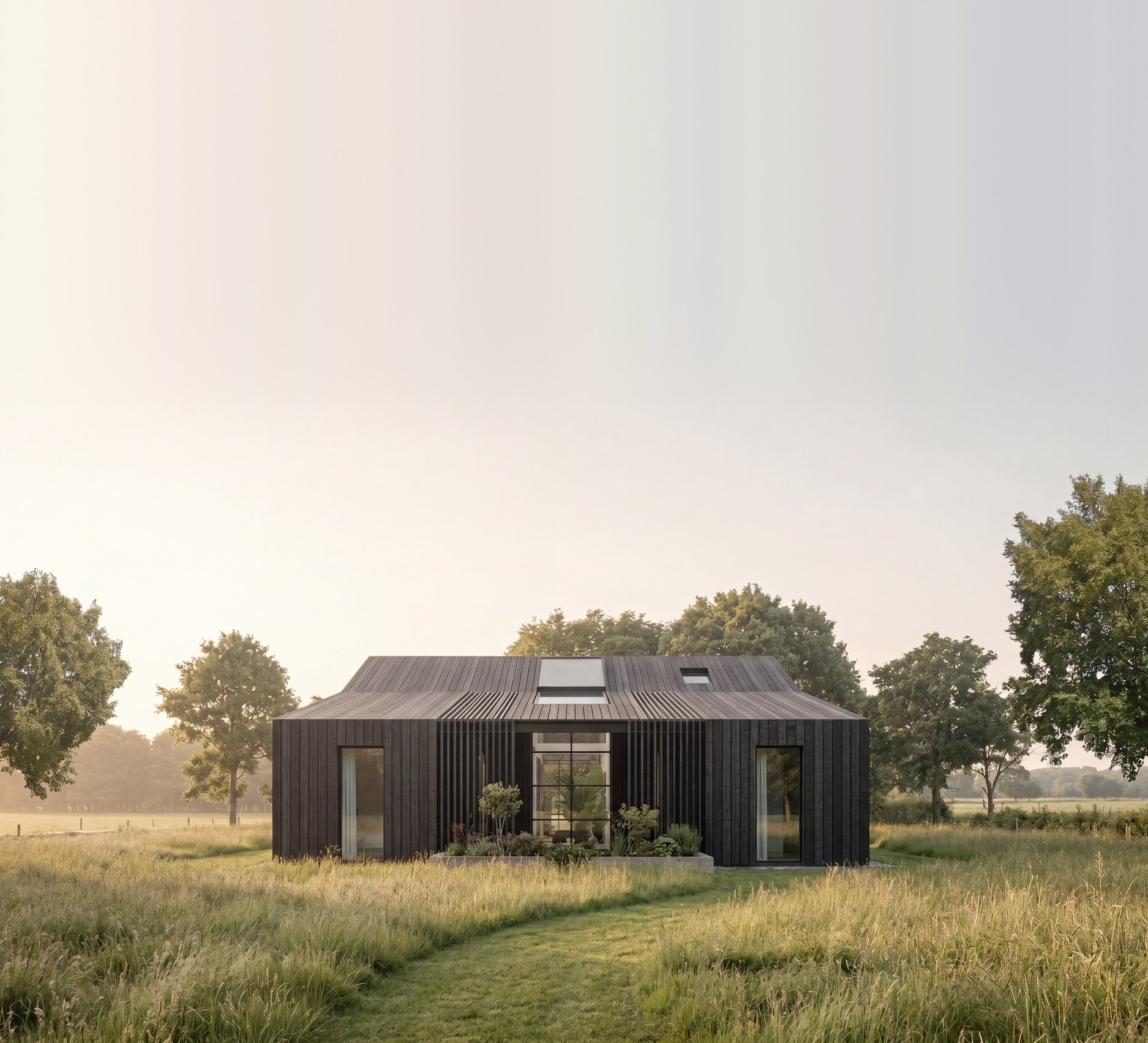
High Chimneys Farm
A precast-concrete portal frame on a working smallholding, granted prior approval as a four-bedroom house around a top-lit courtyard.
View project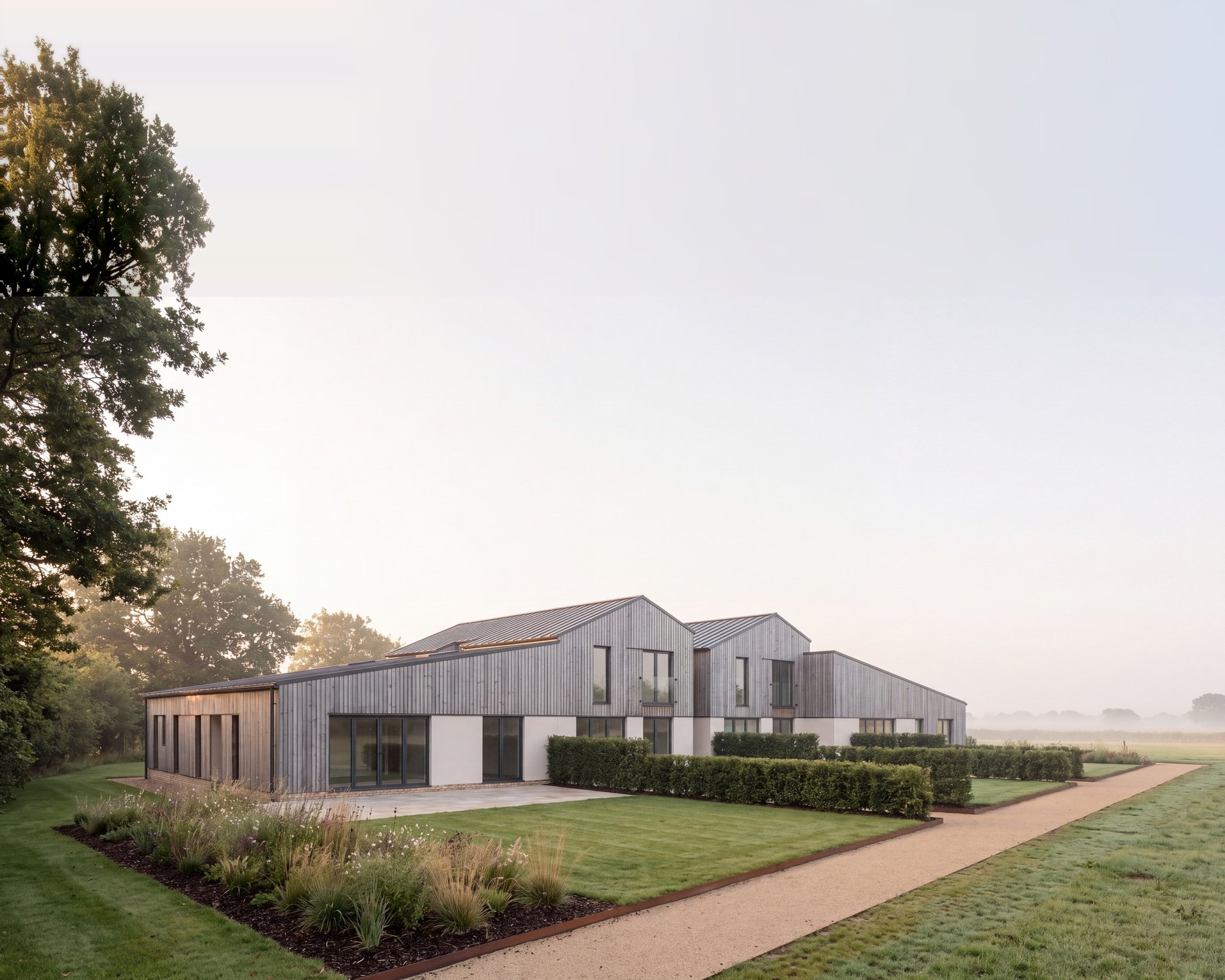
Fertiliser Barn
A redundant fertiliser barn with an implemented Class Q prior approval for five homes. Used as the fallback, it won a better scheme through full planning.
View projectGet to know the right.
 Before you commit · 01
Whether the barn qualifies at all.
Four things decide it: what the building was and when, whether it converts rather than rebuilds, where it sits, and whether it clears the tests.
Read more → The limits · 02
Ten homes, and none of them large.
Up to ten homes, 1,000 square metres in total, none over 150. The right was rewritten in May 2024, so older guidance describes something else.
Read more → The structural test · 03
Conversion, not rebuild.
The commonest reason a Class Q application fails is that the building cannot take the conversion. The right covers works reasonably necessary, and no more.
Read more → The other route · 04
When Class Q is the wrong application.
Plenty of good barns do not qualify. Saying so early, and going to full planning instead, is usually what gets the building converted.
Read more → Prior approval · 05
What the authority is allowed to consider.
Prior approval is not a design review. It examines a defined list, and every item on it is a refusal point if left unevidenced.
Read more →Prior approval in forty-three days.
Green Gate Barns. A steel shed with one side open to the weather, now two houses that people live in, all of it inside the original shell.
Send us the barn. A director gives you an honest read on whether Class Q is open to it, before anything significant is spent.
→ Start a conversation
Green Gate Barns and High Chimneys Farm were granted Class Q prior approval in forty-three and forty-seven days against a fifty-six-day period. One is converted and lived in, the other is consented.
More
Not every barn is a Class Q case, and the ones that are not are better told early than late. Rickett Architects has worked since 1970, with more than 2,500 projects behind it.
Whether the barn qualifies at all.
Class Q is a permitted development right, not a planning application. It lets an agricultural building become a home through prior approval, which tests a defined checklist rather than the merits of the design. That makes it faster and more predictable than a full application, and much narrower. Four things decide whether it is open to you. The building has to have been part of an established agricultural unit on 24 July 2023. It has to be capable of conversion without what amounts to a rebuild. It cannot be listed, scheduled, in a conservation area, a National Park, a National Landscape, the Broads, a World Heritage Site, an SSSI, a safety hazard area or a military explosives storage area. And the scheme has to clear the prior-approval tests. Any one of them closes the route.
So the first piece of work is a feasibility view: the building read against all four, while it is still cheap to find out. If the barn does not qualify, that is the answer you get early, and there is usually another route worth testing. Read what Class Q allows.
Ten homes, and none of them large.
Class Q allows up to ten dwellings from the agricultural buildings on a unit, with a cumulative floorspace of 1,000 square metres, and no individual dwelling larger than 150 square metres. Since May 2024 a single-storey rear extension of up to four metres can also form part of the conversion, which was not possible before.
Those ceilings matter more than they look, because they are cumulative and they bite across the whole unit rather than one building. A scheme can be designed to sit exactly on them, and the arithmetic is worth doing before the plan is drawn rather than after. The entire class was substituted on 21 May 2024, and the window that let applicants use the old rules closed on 20 May 2025. Guidance written before those dates is describing a different right, and older consents were granted under limits that no longer apply. Every scheme is checked against the limits in force at the date of its own application.
Conversion, not rebuild.
Class Q looks like a fast track, and the structural limb is what catches people out. The right permits building operations reasonably necessary to convert the building. It does not permit replacing it. If the frame, the walls and the foundations cannot carry a dwelling with the works the right allows, the application fails however good the design is.
That is an evidence question about a building that already stands, not a design question, so it is settled with a structural inspection early. The building either takes the conversion or it does not, and it is far better to know before the application than after it. The other recurring failures are the same every time: the site turns out to sit on excluded land, the agricultural-use test is not met on the qualifying date, or one of the prior-approval matters is left unevidenced. All of them are findable in advance. Front-loading the survey and the eligibility check is the whole difference between a clean prior approval and a wasted application.
When Class Q is the wrong application.
Class Q is quicker and tests a checklist. Full planning is slower and less certain, and it gives far more design freedom, carries no 150-square-metre ceiling and can take a building that would never pass the Class Q structural test. Neither is better. The right question is which one will actually deliver this building.
Plenty of barn conversions never go near Class Q, and the reason is usually visible at the outset. At Cannings Farm in Norton Lindsey the farmhouse and its redundant range sit wholly within a conservation area, which is excluded land, so Class Q was closed from the start; the scheme was granted at the first attempt, with no appeal, and has been built. At a farmstead in South Warwickshire a historic stone barn simply did not fit the Class Q checklist, so it went to full planning and was consented, locked to a second consent that moves the working grain store next door. Being told early that Class Q is not your route is not a setback. It is the cheapest thing that can happen to a barn conversion.
What the authority is allowed to consider.
The authority considers transport and highways, noise, contamination, flooding, whether the location or siting makes residential use impractical or undesirable, the design or external appearance of the building, and whether every habitable room gets adequate natural light. Where the rear extension is used, the impact on neighbours is added to the list. That is the whole list, and it is also the whole set of refusal points, so the submission has to answer each one rather than assume it.
Natural light is the one that surprises people. Agricultural buildings are often very deep in plan, and getting daylight into the middle of one is a real design problem with a limited palette of openings to solve it with. At High Chimneys Farm the answer was a top-lit courtyard cut into the heart of the plan. The authority has 56 days to determine the application. If it does not, development may begin. That is not the same as approval: the 56 days let you start, but they do not make an ineligible building eligible, and a scheme that fails any of the tests above is not rescued by the clock running out. Anyone who tells you Class Q is automatic after 56 days is describing something the legislation does not say.
Questions? Start here.
Straight answers to what people ask first about converting a barn under Class Q.

What is a Class Q barn conversion, and can I do it on my barn?
Class Q is a permitted development right that turns an agricultural building into a home through prior approval rather than a full planning application. Four things decide whether your barn qualifies: agricultural use on 24 July 2023, a building that converts rather than needs rebuilding, a site not on excluded land, and clearing the prior-approval tests.
Read the guide→
What are the current Class Q size and number limits?
Up to ten homes from the agricultural buildings on a unit, 1,000 square metres in total, and no single dwelling over 150 square metres. A single-storey rear extension of up to four metres can also form part of the conversion. The right was rewritten on 21 May 2024, so older guidance describes limits that no longer apply.
Read the guide→
Why do Class Q applications get refused?
Usually one of a few recurring reasons: the building cannot be converted without what amounts to a rebuild, the site sits on excluded land, the agricultural-use test is not met on the qualifying date, or a prior-approval matter is left unevidenced. All of them can be found before submission rather than after it.
View the project→
Class Q or full planning, which route is right for me?
Class Q is faster and tests a defined checklist, but it is tightly capped on size and numbers and will not take a building that fails the structural test. Full planning is slower and less certain, with no size ceiling and far more design freedom. Plenty of barn conversions go that way because Class Q was never open to them.
View the project→
What exactly does the prior-approval stage assess?
Transport and highways, noise, contamination, flooding, whether the siting makes residential use impractical or undesirable, the design or external appearance, and adequate natural light to every habitable room. The authority has 56 days. If it does not determine the application, development may begin. That is not approval, and it does not make an ineligible building eligible.
View the project→
What does a Class Q architect cost?
You do not commit to the whole thing on day one. A feasibility and eligibility view tests the barn against the four qualifying conditions for a modest fee, before any significant spend. The submission and the conversion design are quoted separately, and the fee is set out plainly before you decide how far to go.
Read more→
Have you done Class Q conversions like mine before?
Barn and farm-building conversions are core work for the practice. Green Gate Barns and High Chimneys Farm were granted Class Q prior approval in forty-three and forty-seven days against the fifty-six-day period, one of them now converted and lived in. Others were barn conversions where Class Q was never open, and went to full planning instead.
See the work→